Earlier that evening Air Canada 305's crew, flying over southern Quebec, had reported a brilliantly lit object; the Condon Committee later judged that and the evening's other sightings unrelated. At Shag Harbour, witnesses ashore saw a light go down onto the water. An object was reported to have gone down in the harbour, and RCMP officers, Coast Guard boats and divers searched the site and recovered nothing. The case was later reviewed by the Condon Committee.
The paper trail is the case: three services, one fishing village, and nothing recovered.
The crew of Air Canada Flight 305, porch witnesses at Mahone Bay, the fishing vessel MV Nickerson, and the search crews
Evidence
Witness reports across the evening, then an RCMP, Coast Guard and Canadian Forces search by boat and diver
Agency
RCMP, Canadian Coast Guard and Canadian Forces; reviewed by the Condon Committee
Assessment
B · multi-agency search, nothing recovered
The full file
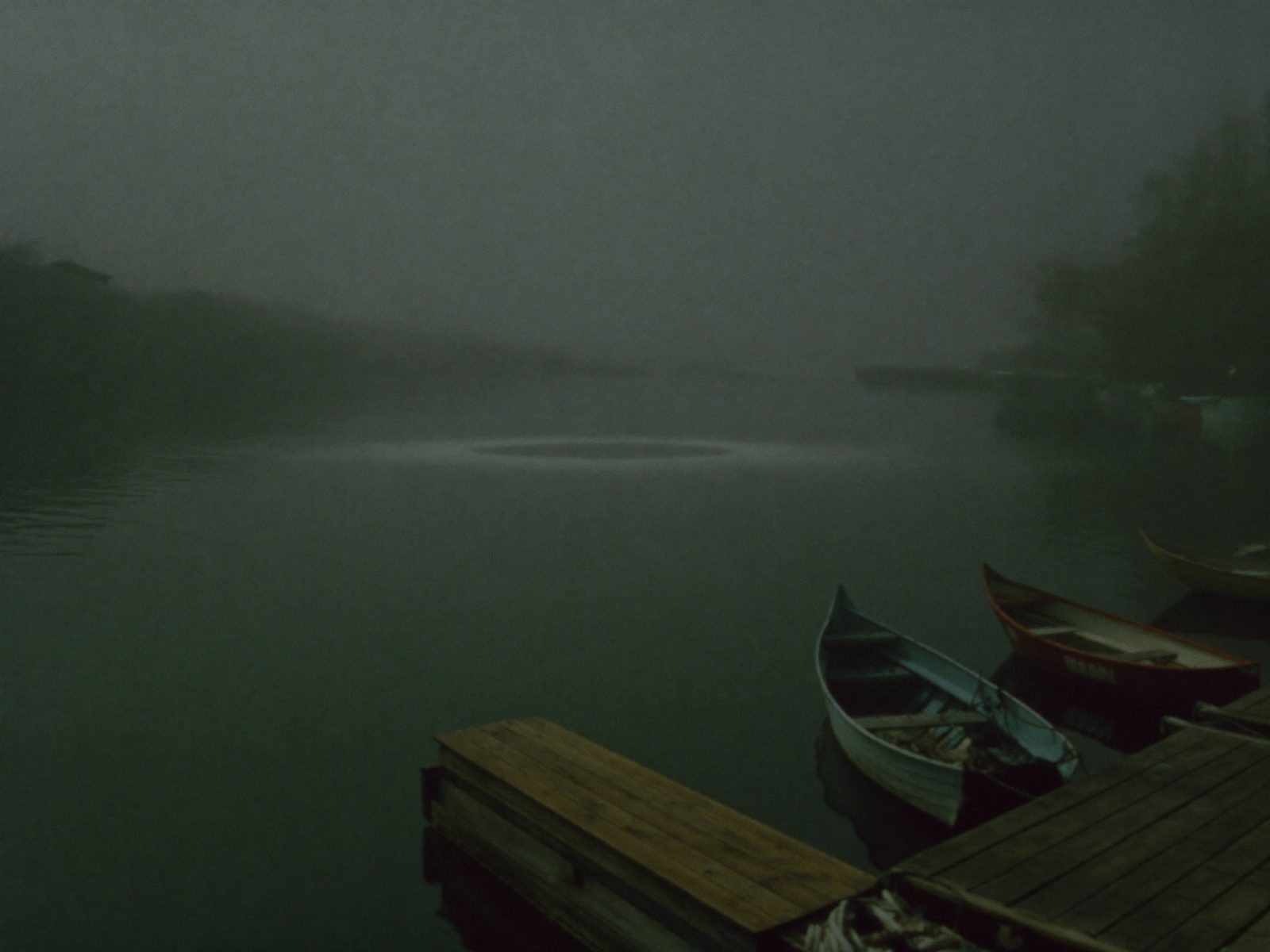
Late on the night of Wednesday 4 October 1967, people driving along Highway 3 above Shag Harbour, a fishing village near the southern tip of Nova Scotia, saw a row of lights come down towards the sea. They took it for an aircraft in trouble and called the police. What followed was a search by the Royal Canadian Mounted Police (RCMP), the Coast Guard, fishermen and Navy divers, and official papers recording that nothing was found.
The night of 4 October
The first report reached the RCMP detachment at Barrington Passage from five young people in a car. One of them, Laurie Wickens, was 17; he later told the Canadian Press he rang from a phone booth. As the RCMP corporal later told the University of Colorado project, the group saw "three or four yellow lights in a horizontal pattern", about the size of a "fair-sized" aircraft, descending at roughly 45 degrees. They lost sight of it behind a small hill for about ten seconds, then saw a single white light on the water where they judged it had gone in.
Two constables and their corporal arrived about fifteen minutes later, in time to see the light on the water; it lasted about five more minutes. Two young women on the island across the channel saw three yellow lights tilt and descend, and a man about two miles away saw three red-orange lights come down with a whistling sound like a falling bomb. Accounts disagree on colour, on the number of lights and on how far offshore the light lay: the Condon account gives 200 to 300 yards, the Canadian Press about 300 metres. Most place the time at about 11.20 pm Atlantic Daylight Time.
Other reports that evening, a fishing captain's radar contacts and an airline crew's lit object and two explosions, are often folded into the story. The Condon project noted that the position the captain gave for his contacts was about 175 nautical miles from the site and judged the two "do not appear to be related"; the airliner is usually placed over southern Quebec.
The search and the paper trail
Within minutes the two officers were out in a rowboat, joined by a Coast Guard boat and six fishing boats. They found no wreckage, survivors or debris, only patches of foam 30 to 40 yards wide that the fishermen did not think was ordinary tidal foam. The RCMP checked with the Rescue Co-ordination Centre in Halifax and a nearby RCAF radar station: no aircraft was missing, no air operations were under way, and radar had recorded nothing unusual. The night was clear and moonless.
With ordinary causes checked, the Rescue Co-ordination Centre passed the case to Canadian Forces headquarters in Ottawa as a UFO report, and Navy divers from Fleet Diving Unit Atlantic searched the sea floor for about three days. A Coast Guard telex the following day recorded "MANY SMALL BOATS - NIL RESULTS". A Department of National Defence memo of 6 October, signed by Colonel W. W. Turner among others, said the Halifax centre's preliminary investigation had "discounted the possibilities" of an aircraft or flare. The Halifax Chronicle-Herald reported strange lights on 6 October, the Shag Harbour search on 7 October and the end of the Navy search on 9 October.
Library and Archives Canada holds the surviving federal paperwork among the National Research Council's non-meteoric sighting reports (record group RG77), including a 1967 microfilmed file.
What investigators concluded
The University of Colorado UFO Project, led by Edward Condon, logged it as Case 34. Its investigator, Levine, worked by telephone with the RCMP and Maritime Command, noted that "apparently no one actually saw anything enter the water" and closed the file without an identification, judging that no further investigation was "justifiable" given "the immediate and thorough search" already made. No Canadian body has since offered an explanation. From 1993 the researchers Chris Styles and Don Ledger gathered unnamed accounts from former service members of a longer, secret operation further up the coast; no released document matches them.
The conventional explanation
The leading conventional explanation is a falling light misread as a crash: most likely marine distress flares, or a fireball breaking into a string of lights. The writer Brian Dunning argues that flares fit the one feature every account shares, lights falling into the bay, and that a flare could float and burn briefly on the surface. Its strengths: flares are standard safety equipment on fishing boats, fireballs often fragment into a line of lights and seem slow, and the official papers record a failure to find anything rather than a positive finding. Its weaknesses: no flare fired that night has been identified, a meteor does not leave a light on the water for several minutes, and no one has shown a flare would leave the broad foam the searchers described.
What remains open
The core record is solid and dull: several groups of witnesses, a police response within a quarter of an hour, a light on the water seen by officers, foam, and a multi-agency search that recovered nothing. What remains disputed is what the papers mean. "Discounted" in the Turner memo can be read as a finding or simply as a note that nothing turned up. The later claims of a tracked underwater object rest on anonymous testimony, and the link to the other sightings that evening has never been shown.
Sources
Condon Report, Case 34: Canadian Naval Maritime Command(archived) — University of Colorado, Scientific Study of Unidentified Flying Objects, 1968 (transcribed by NCAS). Primary account of the witnesses, the foam, the radar check, the dive search and the project's conclusion.
Shag Harbour UFO incident(archived) — Wikipedia, used as an index. The Chronicle-Herald dates, the Rescue Co-ordination Centre referral and the Air Canada 305 position.
Corrected The full file: The text said the Condon project put the fishing boat about 175 nautical miles from the site; the report says the position the captain gave for his radar contacts was that far away (the boat itself was about 16 miles off), and the text now says so.
Corrected Air Canada 305 was over southern Quebec when its crew reported a lit object, and the Condon Committee judged that sighting unrelated; the file previously placed it over the water, with two silent explosions.
Sources The source on file is now Library and Archives Canada's Shag Harbour records rather than an encyclopedia article.
Added The full file, a long-form write-up with its sources, added.

 INDEPENDENT FIELD ARCHIVE