The full file
On the night of 13 to 14 August 1956, American radar controllers at two airfields in East Anglia tracked targets they could not identify, and the Royal Air Force sent night fighters to intercept them. The bases, RAF Bentwaters in Suffolk and RAF Lakenheath some 40 miles to the north-west, were RAF stations occupied by the United States Air Force.
What was reported
The US Air Force's own report, sent from Lakenheath on 16 August, begins at Bentwaters. At 2255 GMT on the 13th, its ground-controlled approach radar picked up an object 30 miles to the east, crossing the scope at an estimated 2,000 to 4,000 miles an hour. The tower reported a bright light passing over the field, and the pilot of an aircraft flying at 4,000 feet reported a light streaking beneath him. The 1968 letter described below remembers a blurry light and a C-47 at 5,000 feet.
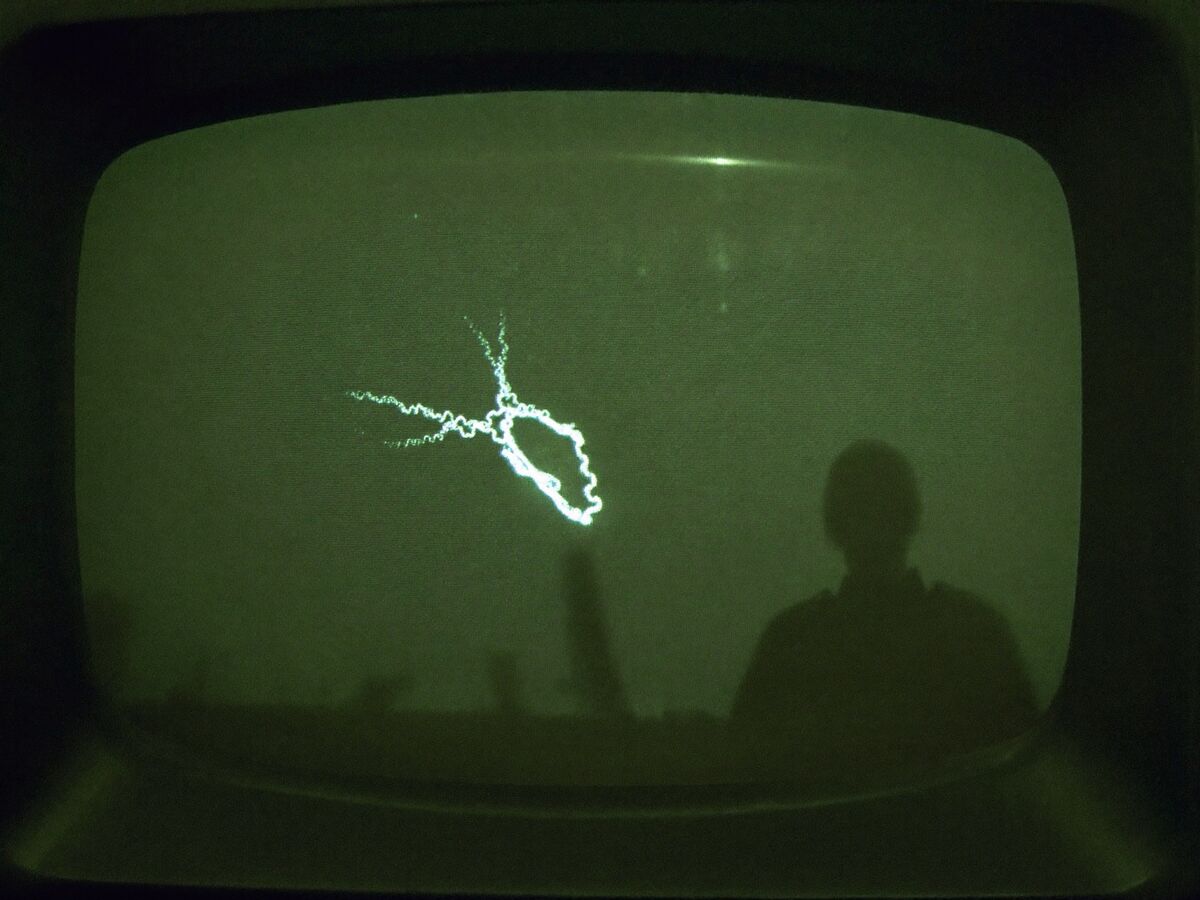
Bentwaters telephoned Lakenheath. From about 0010 GMT, Lakenheath's radar room and its approach radar tracked a target that sat stationary, then moved off in straight lines with no build-up of speed, and stopped again. The 1956 report gives 600 to 800 miles an hour; a later account gives 400 to 600. Ground observers described round white lights, at first the size of a golf ball, without trail or sound. The night was clear, during the Perseid meteor shower.
An RAF de Havilland Venom night fighter was scrambled. According to the USAF report its pilot saw a bright white light, locked his radar on, and called the return the "clearest target I have ever seen on radar". The target is then said to have moved behind the fighter and stayed there while the pilot tried to shake it off. A second Venom was sent and returned with a fault. The targets left the scopes at about 0330 GMT.
The evidence and where it is
No radar film or plot survives in the public record. The core document is the USAF report, teletype BOI-485, sent by the 3910th Air Base Group at Lakenheath under the reporting regulation AFR 200-2. It lists three ground radar sets and the Venom's airborne radar. It sits in the Project Blue Book case file, now held with the rest of Blue Book at the US National Archives. On the British side, the researchers who later reconstructed the night found that no original RAF radar records from the time survive.
The second account came twelve years later. In 1968 a retired USAF sergeant, the watch supervisor in Lakenheath's radar room that night and later named as Forrest Perkins, wrote unsolicited to the University of Colorado's UFO study, the Condon Committee. His letter described the tail chase in more detail. The committee found the Blue Book file confirmed his main points.
What investigators concluded
The intelligence officer who sent the 1956 report judged the sightings "real and not figments of the imagination", and wrote that three radars picking up the same target at once was "certainly conclusive" that something was in the air. An early suggestion in the file that the lights were Perseid meteors was rejected by the Air Force's consultant J. Allen Hynek, who wrote that it seemed "highly unlikely" they could have caused the sightings.
The Condon Committee examined the case as its Case 2. Its radar analyst, Gordon Thayer, thought anomalous propagation possible but its probability "small", and called this "the most puzzling and unusual case in the radar-visual files". The case report concluded that the probability that "at least one genuine UFO was involved appears to be fairly high".
From the mid-1990s the British researchers David Clarke, Andy Roberts, Martin Shough, Jenny Randles and Paul Fuller traced the Venom crews of No. 23 Squadron at RAF Waterbeach. Their accounts differ from the American record. The navigator of the first aircraft, John Brady, logged a take-off at 0200 on the 14th, later than the times in the US accounts, and said that his pilot, David Chambers, made no visual contact. He described the radar return as "just this little, faint paint" that appeared stationary, and likened it to a balloon carrying a radar reflector. A second crew followed some 40 minutes later. Chambers and that crew's navigator, Ivan Logan, are reported to have described weak contacts and no tail chase.
The conventional explanation
The leading explanation divides the case in two: false radar returns from anomalous propagation, perhaps with balloons, for the scopes, and Perseid meteors or misread lights for the eyes. The aviation writer Philip Klass argued for that combination in 1974. Its strength is the setting: a summer night in a meteor shower, a target that faded as it crossed the Bentwaters radar, which the Condon report itself called suggestive of propagation effects, and a fighter crew who later described something faint. Its weakness is that the 1956 report records simultaneous tracking on several sets, a target that stayed on the scope when the moving-target filter was applied, and ground observers whose lights left no meteor trails.
What remains disputed
The record splits by date. The documents written in 1956 and the 1968 letter describe a sharp, manoeuvring target that turned behind the interceptor. The crews interviewed half a century later describe a weak return and no chase, and their logbook times do not match the American account. The RAF controller at Neatishead, Freddie Wimbledon, wrote in 1978 that his unit, not Lakenheath, directed the Venoms, and remembered a solid return on several sets. Without surviving radar records, no reading of the case explains every source.
Sources
- Condon Report, Section IV, Case 2 (archived) — University of Colorado, Scientific Study of Unidentified Flying Objects, 1968–69. The Blue Book message as reproduced, the 1968 watch supervisor's letter, Hynek's remark on the Perseids and the case conclusion.
- Condon Report, Section III, Chapter 5, "Optical and Radar Analyses of Field Cases" (archived) — Gordon D. Thayer, 1968–69. The assessment of anomalous propagation and the "most puzzling and unusual case" verdict.
- USAF teletype BOI-485, 3910th Air Base Group, RAF Lakenheath, 16 August 1956 (archived) — US Air Force, Project Blue Book file; transcript in the Lakenheath Collaboration archive. Times, radar sets, visual descriptions, the pilot's words and the reporting officer's comments.
- Transcript of BBC Radio 4 interview with John Brady, April 2002 (archived) — David Clarke / BBC Radio 4, 2002. The navigator's logbook take-off time and the timing of the second crew.
- Transcript of interview with John Brady, 11 February 2001 (archived) — David Clarke and Andy Roberts, 2001. No visual contact, the faint stationary return, the balloon suggestion.
- Lakenheath Collaboration, background and history (archived) — Clarke, Fuller, Randles, Roberts and Shough, c. 2003. The researchers' project and the absence of surviving RAF radar records.
- Lakenheath-Bentwaters incident (archived) — Wikipedia, used as an index. Klass's 1974 argument, Wimbledon's 1978 letter and the crews' later statements, with citations to the originals.

 INDEPENDENT FIELD ARCHIVE