The most respectable form of the claim is that the reports describe a surviving giant ape: a fossil species, not a folk monster. In January 2024 a multidisciplinary study of twenty-two caves in southern China, using a hundred and fifty-seven dates from six different methods, placed that ape's extinction in a window of 295,000 to 215,000 years ago. The orangutan line adapted as the forests opened up and survived; this one did not, showing signs of chronic stress and shrinking populations first. The result does not touch the question of what a person sees in a forest at dawn. It does close the one named candidate, and it closes it by two hundred thousand years and a continent.
These caves are being sampled. This is a dated result, not a gap in the survey.
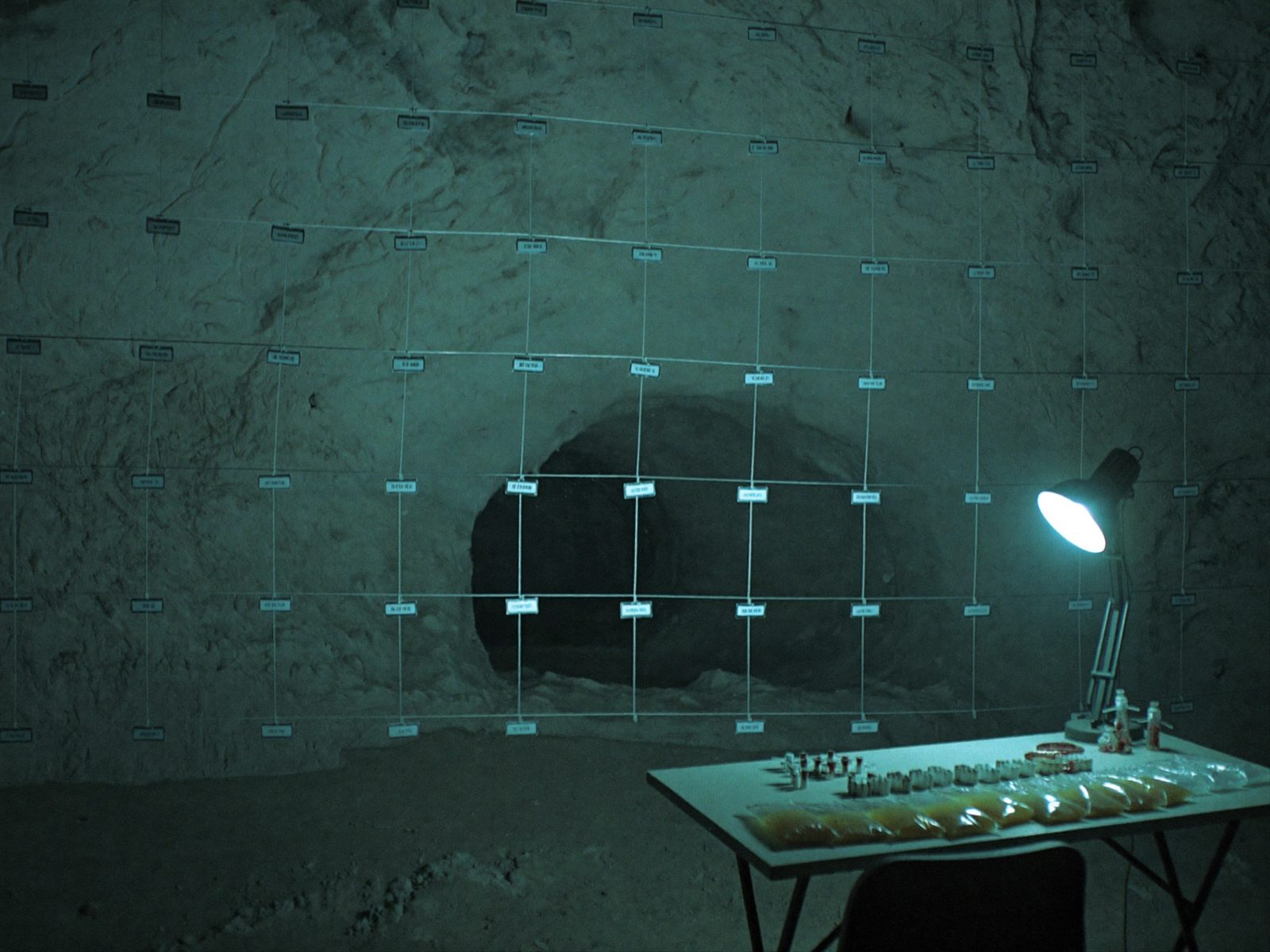
AI illustration · imagined scene, not an evidence photograph
File
CR-0072
Date
10 January 2024
Place
Caves of southern China
Record
None. This file has no witness; it holds the animal the reports are said to describe
Evidence
157 radiometric ages from six dating techniques, across 22 caves
Agency
None
Assessment
A · tested and bounded
The full file
This file has no witness. It concerns the animal that the most respectable version of the Bigfoot and yeti argument names as the thing people are seeing: Gigantopithecus blacki, a giant ape known only from fossils in southern China. On 10 January 2024 the journal Nature published a study, led by Zhang Yingqi of the Institute of Vertebrate Palaeontology and Palaeoanthropology (IVPP) in Beijing and the geochronologist Kira Westaway of Macquarie University in Sydney, that dated the ape's extinction to between 295,000 and 215,000 years ago.
The claim and the animal
The species entered science through a medicine shop. In 1935 the palaeontologist G. H. R. von Koenigswald identified a huge molar sold in Hong Kong as a "dragon tooth" for traditional remedies, and named a new ape from it. The Nature paper itself records the apothecary origin; ABC News, reporting in 2005, gives the 1935 date.
The link to Bigfoot was made most prominently by Grover Krantz, a Washington State University anthropologist. His 2002 obituary in the Seattle Times summarised his theory as the survival of an ape "thought to be extinct" as "the source of modern sightings". For North America, the argument needs the ape or its descendants to have crossed from Asia by the Bering land bridge. Mainstream science never accepted it.
What the evidence is, and where it is held
The fossil record is thin and narrow. According to the 2024 paper it consists of four lower jaws and almost 2,000 isolated teeth, with no bones from below the skull. Everything said about the ape's body is therefore inferred from teeth and jaws. The paper gives an estimated height of about three metres and a mass of 200–300 kg. The Chinese Academy of Sciences' release gives about 250 kg. Most of the teeth come from caves in Guangxi, where the IVPP had been excavating for more than ten years before the study. Von Koenigswald's collections are on permanent loan to the Senckenberg Research Institute in Frankfurt. This file has not confirmed from a primary record where his original type molars are held.
The ape's family tree was settled from the same kind of material. In 2019 a team led by Frido Welker recovered proteins from the enamel of a 1.9-million-year-old molar from Chuifeng Cave, also in Guangxi, and reported in Nature that Gigantopithecus "is a sister clade to orangutans". The two lines last shared an ancestor about 12 to 10 million years ago. It was an Asian great ape, not an early human.
What the 2024 study found
The team worked across 22 caves in the Chongzuo and Bubing Basin areas of Guangxi. Eleven held G. blacki fossils, and eleven caves of similar age did not. They produced 157 radiometric ages using six techniques: two forms of luminescence dating on sediments, electron spin resonance on quartz, uranium-series dating of cave formations and of teeth, and combined uranium-series and electron spin resonance dating of teeth. Before this, very few sites had been dated by more than one method, and the youngest previously dated site, Hejiang, stood at 420,000–330,000 years ago. The new work extended the ape's presence to about 255,000 years ago and fixed the extinction window at 295,000–215,000 years ago.
The authors then compared the ape with its relative Pongo weidenreichi across the same period, using pollen, stable isotopes, wear on the teeth and trace-element banding in the enamel. They describe a shift towards stronger seasons from about 700,000–600,000 years ago, which changed the make-up of the forests and opened them up. The orangutan relative adjusted its diet and habitat, and its teeth grew smaller over time. The teeth of G. blacki grew larger; it leaned on poorer fall-back foods, and its teeth show signs of chronic stress, consistent with dwindling populations. Zhang called it "the ultimate specialist".
The conventional explanation
The leading explanation for Bigfoot and yeti reports does not depend on this ape at all. It is the ordinary mix of misidentified animals, especially bears, along with hoaxes and the effect of earlier publicity on later reports. What the 2024 paper does is remove the one named fossil candidate. Its strength is the dating. Six independent methods agree, and the sampling includes caves without the ape, so this is not a gap in an unsurveyed region. For Bigfoot the gap is about 215,000 years and a continent, because no Gigantopithecus fossil has been reported outside Asia. The ape was also a forest specialist. As early as 2005 the geochronologist Jack Rink judged it unlikely to have adapted to "a cold, snowy climate", which tells against a Himalayan yeti.
The weakness of the result is its scope. It dates the extinction of a population known from southern Chinese caves. It cannot test any individual report.
What remains open
The extinction window is an estimate with real uncertainty, and the youngest fossil yet found is about 255,000 years old. A later find could shift the dates, though not by the two hundred millennia the survival claim needs. Body size remains uncertain because there are no limb bones, and sources disagree on the weight. The causes of decline are the authors' reading of indirect evidence. The question of what witnesses in North America or the Himalayas have actually seen lies outside this file. What is closed is the claim that the answer is Gigantopithecus.
Sources
The demise of the giant ape Gigantopithecus blacki(archived) — Zhang, Westaway et al., Nature 625: 535–539, 2024 (doi 10.1038/s41586-023-06900-0). Extinction window, 22 caves, 157 ages, six methods, fossil record, size estimate, environmental evidence.
Corrected The ape that survived as the forests opened up is now identified as the orangutan line; the file previously called it Gigantopithecus's close relative, a species that is itself extinct.
Added The full file, a long-form write-up with its sources, added.

 INDEPENDENT FIELD ARCHIVE