land / Pomaria, South Carolina, and Voluntown, Connecticut, United States
Credible Because Of The Witness
A police officer hunting deer from a ground blind at about half past six in the morning reported a tall figure with brown hair with long arms and an ape-like face. The two watched each other for about thirty seconds before it walked away. Twenty months later, a driver's report from beside a Connecticut state forest was covered nationally because the organisation that received it called the account credible. That organisation's stated method is to weight reports by the witness: adults over children, and people who were sceptical beforehand over those who went out looking. What it cannot do is turn a sighting at dawn in autumn cover into a measurement — and in the second case the organisation's own public database and its own credible count for that state differ by seven reports.
Naming the witness's occupation is not the same as naming an animal.
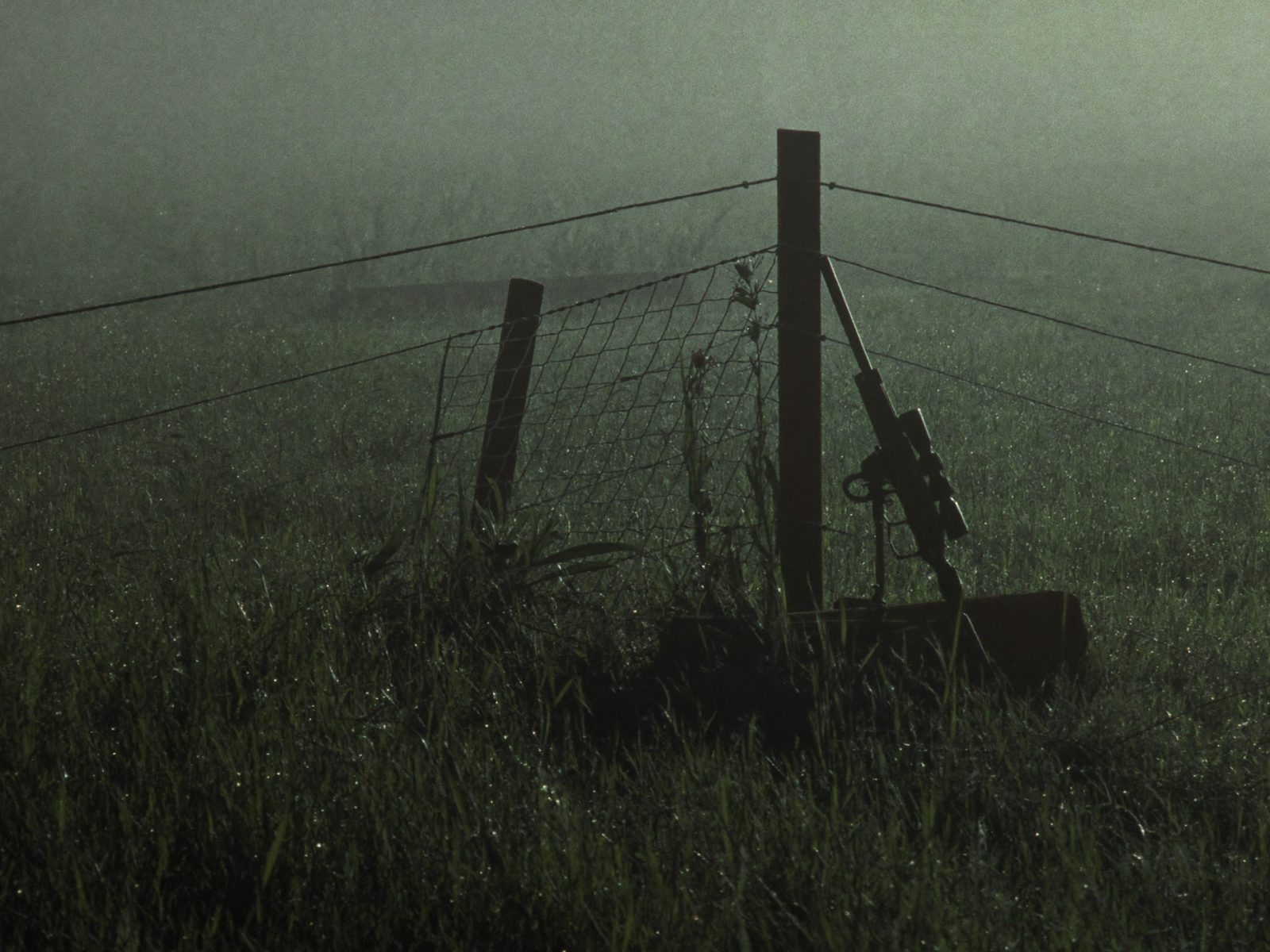
AI illustration · imagined scene, not an evidence photograph
File
CR-0071
Date
2 November 2024 → 5 July 2026
Place
Pomaria, South Carolina, and Voluntown, Connecticut, United States
Record
Two witnesses; the first a serving police officer
Evidence
Report forms and an interview. No measurement of any kind
Agency
None. Both reports were filed with, and endorsed by, a research organisation
Assessment
C · reported
The full file
At about half past six on the morning of Saturday 2 November 2024, a man hunting deer from a ground blind on his family's land near Pomaria, in Newberry County, South Carolina, about 25 miles north-west of Columbia, heard what he called "a loud deep toned grunt and a stomp at the same time". He turned and saw, at roughly 20 yards along a power-line cut, a human-like figure he put at seven to seven and a half feet tall, with long brown hair, an ape-like face and long arms. "We watched each other for probably 30 seconds," he wrote, before it turned and walked off. He filed a report four days later with the Bigfoot Field Researchers Organization (BFRO), a private research group, which published it as report 77862 under his initials. He described himself as a police officer; the BFRO founder, Matthew Moneymaker, wrote that he serves in the west of the state.
Twenty months later, at about 1.45 a.m. on Sunday 5 July 2026, a driver leaving a friend's cabin in Voluntown, Connecticut, near the junction of Wylies School Road and Forge Hill Road and beside Pachaug State Forest, reported braking for a bipedal figure that crossed the road in two or three steps without looking at him. He gave its height as eight to eight and a half feet, with coarse, matted brown hair and arms reaching to the knee. The BFRO published this as report 81329. This witness is not described anywhere as a police officer or public-safety worker; the case is paired with the first because both reached national syndication on the strength of the organisation's endorsement.
What the record holds
Each case consists of a report form, an investigator's note and press coverage built on those two documents. Neither report records a footprint, photograph, sound recording, hair or other sample. In South Carolina the investigator's follow-up added photographs of the power-line route and the nearby Palmetto Trail, not of anything seen there. In Connecticut the BFRO investigator Mike Young interviewed the driver at the roadside two days later and recorded a short video interview; Moneymaker, who spoke to him but did not visit the site, wrote that heavy rain and a floor of pine needles would have defeated any search for tracks. Both records are held only in the BFRO's online database. No police, wildlife or other public agency is known to have opened a file on either sighting.
What the investigators concluded
Both reports were graded Class A. The BFRO's own definition of that grade is a clear sighting in circumstances where misidentification of other animals "can be ruled out with greater confidence". The same page says the class rates the circumstances of a sighting, not the honesty of the witness. Press coverage in both cases read the grade as a credibility score: syndicated reports in August 2026 said the organisation had given the Connecticut account its highest level of credibility, and CBS New York reported on 31 July that the group called the report credible. Moneymaker said of the South Carolina officer, "He is very credible." The organisation's case for both rests on the interview and on the witness, each of whom says he reached the conclusion reluctantly; the Connecticut driver describes himself as a former sceptic.
The only public official on record is the Newberry County sheriff, Lee Foster, who told WACH in November 2024, "I've seen plenty of people with big feet, but not Bigfoot," and warned that anyone searching for the animal in hunting season could run across deer hunters and put themselves in danger.
The leading conventional explanation
The leading conventional explanation is misidentification of a known animal, most plausibly an American black bear, in poor light. Its strengths are specific. The South Carolina sighting took place at daybreak in autumn hardwood cover; the Connecticut one at night, lit at most by headlights, and lasting a few seconds. The South Carolina Department of Natural Resources describes two resident bear populations, in the mountains and upper piedmont and on the coastal plain, and notes that young dispersing bears turn up in many other counties; black bear fur can be brown rather than black. Connecticut's environment department estimates about 1,200 resident bears and says the population is spreading into eastern Connecticut, where Voluntown lies. Its weaknesses are equally specific. Both witnesses describe a human-like figure that walked away; the officer wrote that he was convinced it was a bigfoot, and the Connecticut driver that "this was not a bear". A bear crossing a road on its hind legs in three steps is not what either wildlife agency describes. Nothing in either record points to a hoax.
What remains unresolved
The sources disagree on detail. The officer's own report gives the hair as brown, while Moneymaker's note calls it amber-coloured, the word most of the press then used. The counts disagree as well. The press quoted the BFRO as listing 22 Connecticut sightings, 11 of them in Litchfield County, but the organisation's public state listing showed 29 reports in October 2026, 13 of them in Litchfield. None of these figures is a measurement of animals; they are counts of reports the organisation chose to publish. What each witness saw cannot now be tested, because nothing that could be tested was collected. These cases show the witness's standing being used as evidence, and that standing is all either record contains.
Classification system for reports(archived) — Bigfoot Field Researchers Organization. The definition of Class A and the statement that the class does not measure credibility.
Black bear(archived) — South Carolina Department of Natural Resources. Resident populations, dispersing young bears and colour variation.
Black bear fact sheet(archived) — Connecticut Department of Energy and Environmental Protection. About 1,200 bears, expanding into eastern Connecticut.
Corrected The full file: The text said both witnesses explicitly rejected a bear, but only the Connecticut driver did; it now says the South Carolina officer wrote that he was convinced it was a bigfoot, and the driver that it was not a bear.
Sources The full file: A stray comma was removed from the Free Times source line.
Corrected The full file: The text described each witness as an adult with no stated wish to see such an animal, which neither record states; it now says each man reports reaching the conclusion reluctantly and the Connecticut driver calls himself a former sceptic, as the BFRO reports say.
Corrected The officer described the figure's hair as brown; the file previously called it amber-coloured, which was another investigator's word.
Added The full file, a long-form write-up with its sources, added.

 INDEPENDENT FIELD ARCHIVE