Hauntings and apparitions / Hammersmith, west of London, England
The White Figure of Hammersmith
For some months in the winter of 1803–04 people in Hammersmith reported a figure in white in the churchyard and the lanes. On the night of 3 January 1804 Francis Smith, an excise officer out to catch it, shot dead Thomas Millwood, a bricklayer (Kirby says plasterer) on his way to fetch his wife home in his white working clothes. Smith was convicted of murder at the Old Bailey on 13 January and respited that evening; by the Newgate Calendar's account he was pardoned on condition of a year's imprisonment.
Kirby's account found people in disguise behind the scare: a butcher's boy wearing the maid's clothes in October, a young woman and her companion found out by a chimney sweep, and John Graham, a shoemaker, who confessed to putting on a sheet on 29 December to frighten his apprentice. Not every sighting was traced to a named person, and the Newgate Calendar says the impostor was never identified.
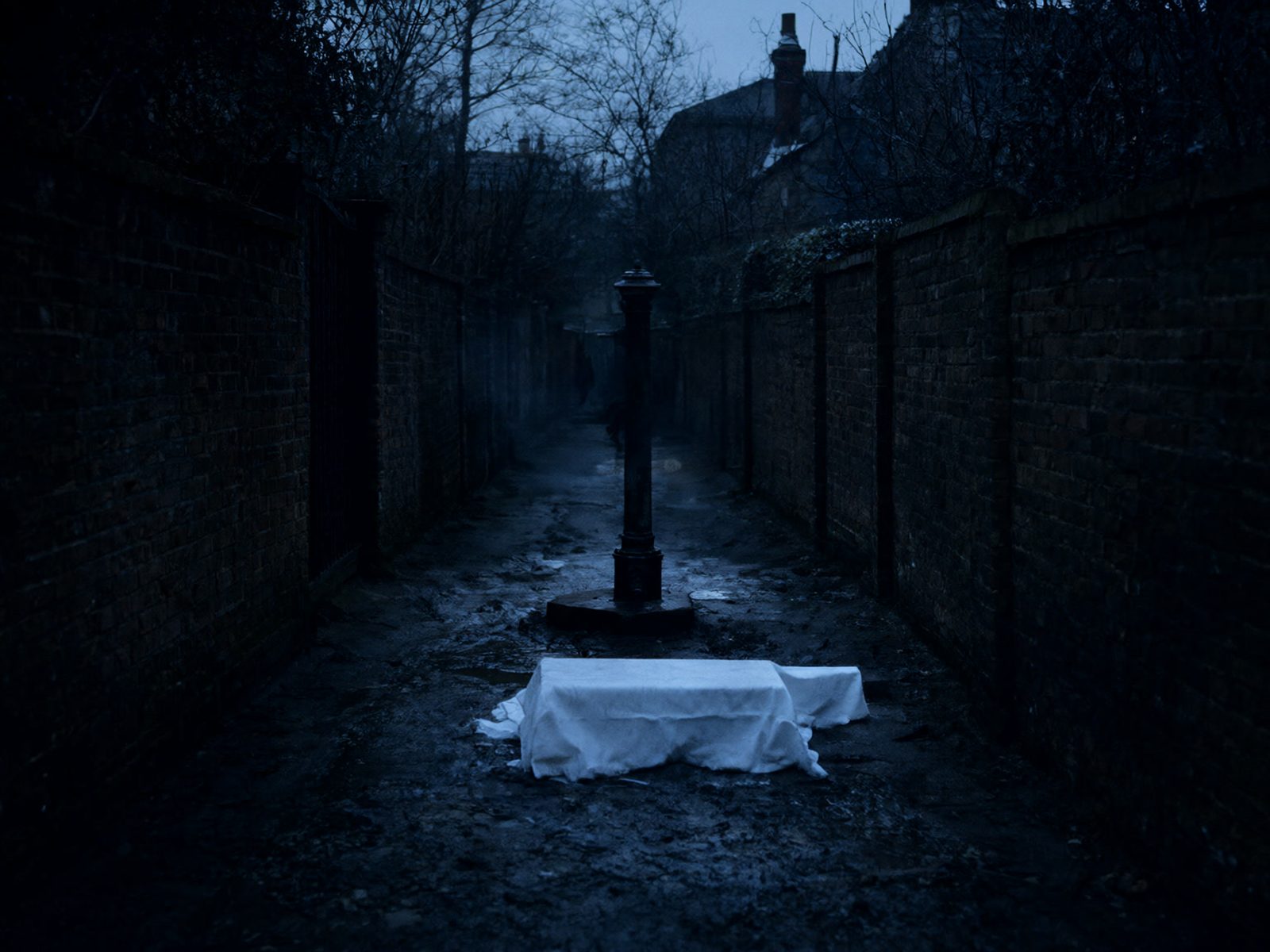
AI illustration · not an evidence photograph
File
BR-0003
Date
October 1803 – January 1804 · shooting 3 January 1804
Place
Hammersmith, west of London, England
AssessmentD · a specific mundane cause, found at the time
The record on file
Witnesses
Residents including a brewer's servant, a brewer's clerk, a chimney sweep, a drummer of the Chiswick Volunteers, and Mrs Steward and her servant; the watchman William Girdler, who chased the figure on 29 December 1803; a shoemaker's apprentice
Evidence
The inquest and Old Bailey trial evidence, printed within weeks in Kirby's Wonderful and Eccentric Museum; the watchman's sworn account of a figure that pulled off a sheet or tablecloth and ran; a shoemaker's confession. The Newgate Calendar gives the sentence and pardon
Record made at the time
"The Hammersmith Ghosts", an account in Kirby's Wonderful and Eccentric Museum that prints the inquest and Old Bailey evidence and Graham's confession, written within weeks of the trial: it reports Smith's respite and "a rumour" that Graham meant to leave his house. The scan opened is the collected edition dated 1820, vol. II, pp. 65–79. The trial itself is printed in the Old Bailey Proceedings (t18040111-79).
In the winter of 1803–04 Hammersmith, then a riverside village west of London, had been, in the words of one account printed weeks later, "disturbed for some months past, by more than one supposed spectre". People reported a figure in white in the churchyard and in the dark lanes running down from the high road. On the night of Tuesday 3 January 1804 Francis Smith, an excise officer aged 29, went out with a loaded gun to catch it, and in a lane off Black Lion Lane he shot dead Thomas Millwood, a young building worker in his white working clothes, who was on his way to fetch his wife home.
What was reported
The fullest account of the scare is "The Hammersmith Ghosts" in Kirby's Wonderful and Eccentric Museum. It dates the first rumours to October 1803. At the trial John Locke, a wine merchant, put the alarm at about five weeks, and William Girdler, the watchman, at six weeks or two months. Kirby names the people frightened: Thomas Groom, a brewer's servant, who said he was seized by the throat in the churchyard; a drummer of the Chiswick Volunteers; a brewer's clerk in Plough and Harrow Lane; and Mrs Steward and her servant. Locke said the figure was described as appearing "in white sometimes, and sometimes in the skin of a beast". Girdler testified that on Thursday 29 December he chased a figure near Beaver Lane, and that it "slipped the sheet or table-cloth off" and ran.
Millwood's sister Ann said she heard a voice cry "who are you, and what are you", threatening to shoot, then the shot. A relative by marriage, Mrs Fulbrooke, testified that a few days earlier Millwood had been taken for the ghost because of his white clothes, and that she had begged him to wear a greatcoat.
The record, and where it is held
What puts the case on this shelf is a set of records made at the time by people other than the frightened witnesses. The first is the trial itself, printed in the Old Bailey's own Proceedings for the January 1804 sessions, now digitised by Old Bailey Online (reference t18040111-79). It gives the sworn evidence on both sides, including the surgeon's. The second is Kirby's account, which reprints the evidence given before the coroner and at the trial, and adds a history of the scare. It was written while the affair was fresh: it reports a rumour that the confessed hoaxer meant to leave his house. The copy scanned is the collected edition of 1820, from the University of California Libraries. The Annual Register for 1804 carries a third, shorter summary of the trial.
What was concluded
The coroner's jury returned a verdict of wilful murder, and Smith was committed to Newgate. He was tried at the Old Bailey on Friday 13 January 1804 before the Lord Chief Baron, with Mr Justice Rooke, Mr Justice Lawrence and the Recorder. The judges held that a man who fired on a supposed ghost had no lawful excuse. The jury first returned manslaughter. The Lord Chief Baron refused that verdict, there being, by the Proceedings' report, "no circumstance in the case that could reduce it to manslaughter". The jury then found Smith guilty of murder, and he was sentenced to death. A respite arrived that evening, and the Annual Register, the Newgate Calendar and Thomas Faulkner's local histories all say he was pardoned on condition of a year's imprisonment.
The leading conventional explanation
The explanation on file is people in disguise. Kirby traces three. In October a butcher's boy had walked the churchyard in the maid's clothes to tease her. Later a chimney sweep, named as Brazier, prodded a white figure with his stick and found a young woman of the village and her companion. Then, a day or two after Smith's committal, John Graham, a shoemaker, confessed that he was the figure Girdler chased on 29 December, put on to frighten an apprentice who had been scaring his children with ghost stories. Kirby is plain that Millwood was "totally unconnected with any impostor whatever".
The explanation is strong where it is specific: a named confession, and a watchman's sworn account of a sheet coming off a living man. Its weakness is coverage. Groom's attacker, the beast-skin figure and several sightings were never traced to anyone, and Kirby gives only Graham's word that his night was his first.
What remains disputed
The sources disagree on details. Kirby and Ann Millwood, as Kirby reports her, call Millwood a plasterer; the Proceedings, Faulkner and the Newgate Calendar call him a bricklayer. Kirby gives his age as about 23 and Faulkner's transcription of his gravestone as 22. The jury's first deliberation lasted about three-quarters of an hour by the Proceedings, an hour and five minutes by the Annual Register, and an hour and twenty minutes by Kirby. Kirby dismissed the horned figure as "newspaper fabrication", and called a reported death from a spectre at Brook Green unfounded, the lady's fright having come from a drunken man. Faulkner nonetheless repeats the story of a pregnant woman who died two days after a fright in the churchyard, and Ann Millwood herself described the beast-skin figure, with horns and glass eyes, as common talk. Faulkner, writing in 1839, says the pretended ghost was never discovered and was still living, and makes no mention of Graham. Whether Graham's confession covered one night, as Kirby reports it, or more, is not settled by any surviving record.
The Newgate Calendar, "Francis Smith"(archived) — nineteenth-century compilation, transcribed by Ex-Classics. Sentence, respite and pardon on the 25th on condition of a year's imprisonment.
Corrected The full file: Kirby called only the horned figure (and a story of cut harness traces) 'newspaper fabrication'; of the Brook Green death he said the report was unfounded because the lady's fright came from a drunken man. The text now separates the two.
Corrected Thomas Millwood is now described as a bricklayer, as the Old Bailey trial record has it, with Kirby's 'plasterer' noted; the file previously called him a plasterer. The trial record is now cited too.
Added The full file, a long-form write-up with its sources, added.

 INDEPENDENT FIELD ARCHIVE