Hauntings and apparitions / Ballechin House, Perthshire, Scotland
The Nun by the Burn
In 1897, with the backing of the Marquess of Bute, a Perthshire country house reputed for knockings was taken in Colonel Lemesurier Taylor's name so that Ada Goodrich-Freer could live there with a stream of guests and record what happened. Her journal records knockings and footsteps at night and, from February, a figure dressed as a nun, seen in the glen by the burn, whom the journal comes to call "Ishbel". F. W. H. Myers of the Society for Psychical Research stayed in April, and in June told The Times the evidence did not justify publication; Bute and Goodrich-Freer printed the journal anyway in 1899.
The leading conventional explanation, put by an anonymous correspondent of The Times on 8 June 1897, was practical jokes begun by an earlier tenant's young family, perhaps kept up by someone on the estate, and ordinary domestic noise. The organisers rejected it and the earlier tenant denied it in The Times; it says nothing of the figure by the burn. Myers, who had stayed from 12 to 22 April, later wrote that he greatly doubted there had been "anything supernormal".
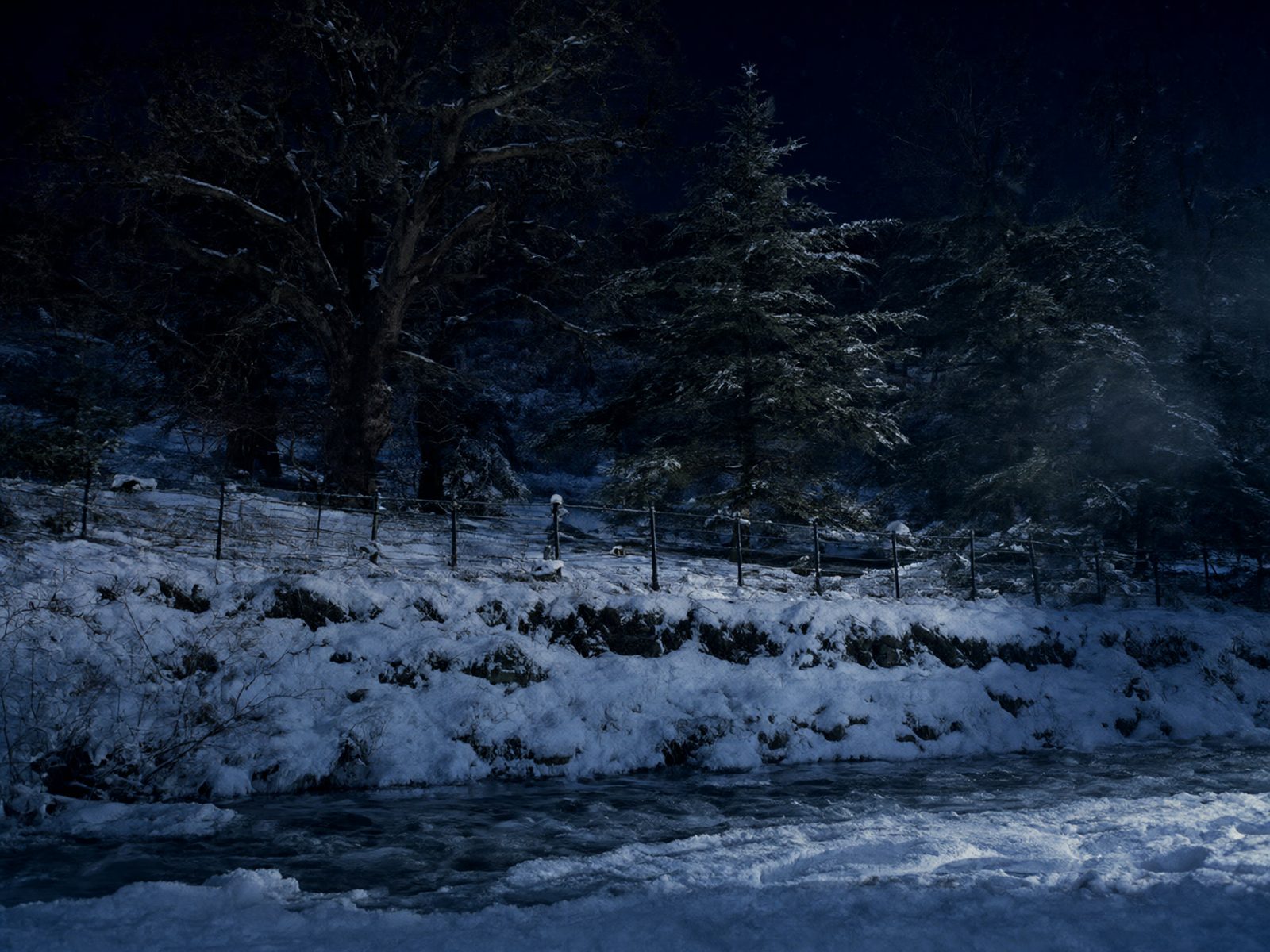
AI illustration · not an evidence photograph
File
BR-0004
Date
3 February – about mid-May 1897
Place
Ballechin House, Perthshire, Scotland
AssessmentB · journal kept during the events; the society declined to publish
The record on file
Witnesses
Ada Goodrich-Freer, who kept the journal, and her companion Constance Moore; guests, by her count eleven women and twenty-one men; servants engaged in Edinburgh who were told nothing of the house's reputation
Evidence
A journal kept through the tenancy, guests' statements, and the correspondence in The Times in June 1897, all printed in the organisers' book of 1899
Record made at the time
Ada Goodrich-Freer's journal, kept at the house from 3 February 1897, with guests' statements; and the correspondence in The Times in June 1897, including Myers's letter for the Society for Psychical Research, published 10 June. All printed in The Alleged Haunting of B—— House (1899), which does not name the house; Newcastle University Special Collections identifies it as Ballechin.
Agency
Ada Goodrich-Freer, for the Marquess of Bute; visited by F. W. H. Myers of the Society for Psychical Research
Ballechin House, in Perthshire, was a country house let for the shooting. In August 1892 a Jesuit priest staying with the third Marquess of Bute at Falkland told him of nights at the house broken by noises "like continuous explosion of petards". Early in 1897 Bute paid for a lease taken in the name of Colonel Lemesurier Taylor of the Society for Psychical Research. The aim was continuous observation by residents. Ada Goodrich-Freer, an SPR member, ran the household with her companion Constance Moore. She arrived on 3 February 1897 by her own journal (Newcastle University's account gives 2 February), and the phenomena she recorded ended, by the book's reckoning, after a bishop blessed the house on 6 May; she left about a week later.
What was reported
The journal records knockings, bangs and footsteps, mostly at night and early morning, beginning on the first night. Servants hired in Edinburgh were, she wrote, "told nothing" of the house's reputation. In the first week a Ouija board in the library produced the name "Ishbel" and told the sitters to go at dusk to the glen "up by the burn". Soon after, at dusk in the snow, Goodrich-Freer saw a slight black figure "dressed as a nun" move up the far bank; the two men with her saw nothing. Over the following weeks she reported the nun again, sometimes with an older woman in grey, and other guests added their own sightings. A guest called "Q." described seeing the figure by the burn on 19 and 20 February, after he had heard her account. The last sighting was through a window during Mass on 6 May. By her count the guests were eleven women, twenty-one men and a correspondent of The Times.
The record and where it is held
The case is on this shelf because the journal was kept daily during the tenancy, with guests' statements and letters to Bute written as things happened, and the dispute that followed was conducted in print within weeks. All of it survives in The Alleged Haunting of B—— House (1899), edited by Goodrich-Freer and Bute, which never names the house. Newcastle University Special Collections holds a copy (Clarke Misc. 437) and identifies the house as Ballechin; the New York Public Library's copy is scanned on the Internet Archive, and the text is on Project Gutenberg. The original letters to The Times of June 1897 are in that newspaper's archive. Whether the manuscript journal survives is not known.
What investigators concluded
F. W. H. Myers, the SPR's honorary secretary, stayed from 12 to 22 April with Oliver Lodge and a medium while Goodrich-Freer was away. Lodge wrote that the sounds were "objective though not impressive" and gave no scope for physical tests. On 8 June The Times printed "On the Trail of a Ghost" by an unnamed correspondent who had been a guest. It called the inquiry an imposture and the house one with "no reputation whatever" before the previous year. Myers replied, in a letter the book dates 10 June, that he had judged there was "no such evidence as could justify" publication in the SPR's Proceedings. In March 1898 he asked Bute not to use his letters, writing that he greatly doubted "there was anything supernormal". Bute and Goodrich-Freer published regardless. The SPR's own encyclopedia now calls the affair a "debacle" that ended her relationship with the society.
The leading conventional explanation
The explanation offered at the time, and still the leading one, is ordinary noise plus a story that fed on itself. The Times correspondent cited the family lawyer and the parish minister: the house had no reputation before the shooting season of 1896, when young members of the previous tenant's family had played practical jokes. Any remaining noises, he suggested, were domestic or someone on the estate keeping the jokes up. The previous tenant denied the jokes in The Times, though he put the noises down to hot-water pipes and the build of the house. The seismologist John Milne, writing to Goodrich-Freer on 15 May, suggested the sounds might be seismic, since Perthshire had recorded 465 shocks between 1852 and 1890. The owner refused to extend the lease for instruments, so the idea was never tested.
The noise explanations fit the pattern Lodge describes: intermittent, brief and with long quiet spells. They do not reach the nun. For her the conventional reading is suggestion: the figure first appeared on the evening the Ouija board named "Ishbel" and sent the party to the burn; most sightings were at dusk in a wood; and the chief witness to them was the journal's own author. The SPR reviewer Frank Podmore later judged her prone to hallucination to an unusual degree. J. L. Campbell and Trevor Hall later showed that she had plagiarised material in other work. That damages her reliability without settling this house.
What remains disputed
The guests' testimony is the part that suspicion of Goodrich-Freer does not settle. Several people who were not the organisers recorded knocks and footsteps, and a few recorded figures. How much they were led by what they had already heard cannot now be measured. The jokers were never identified, and the seismic suggestion was never tested. The correspondent's name is not given in the book; later secondary accounts name him as J. Callender Ross, but that attribution has not been checked here against the paper itself.
Sources
The Alleged Haunting of B—— House (full text)(archived) — A. Goodrich-Freer and John, Marquess of Bute (eds.), George Redway, 1899; Project Gutenberg. The journal, the guests' statements, the Times letters as reprinted, and the Myers, Lodge and Milne correspondence.
The Haunting of Ballechin House(archived) — Newcastle University Special Collections, 2020. Identifies the house, gives the shelfmark and summarises the Times article.
Ada Goodrich Freer(archived) — Melvyn Willin and James G. Matlock, Psi Encyclopedia, Society for Psychical Research, 2026. Bute's sponsorship, Myers's stay, Podmore's review, and Campbell and Hall's findings.
Corrected The full file: The SPR's Psi Encyclopedia was said to describe the Ballechin debacle as ending Goodrich-Freer's part in psychical research; it says the affair ended her relationship with the SPR, and the text now says that.
Added The full file, a long-form write-up with its sources, added.
Also filed under Hauntings and apparitions
Borley RectoryThe Rectory at Borley · 1900 – 1939 · investigated from June 1929

 INDEPENDENT FIELD ARCHIVE