land / Chehalis (Sts'ailes), British Columbia, Canada
The Word A Schoolteacher Chose
In 1929 a teacher employed on the Chehalis reserve in British Columbia published a collection of encounters in a national magazine, under a title about hairy giants. His word for the being was an anglicisation of a Salish term meaning roughly wild man or hairy man, and it is his word, not the community's, that the world has used since. The article retells one account of a man pursued by a creature he first took for a crouched bear until it stood up and yelled. When the narrator told the village elders, they listened; and in the author's own description they seemed not to wish the story to gain further publicity. He published it anyway. As zoology the article claims nothing testable. As a record of how a category becomes a species it is exact.
The beings behind the word were not one animal, and were closer to people than to animals.
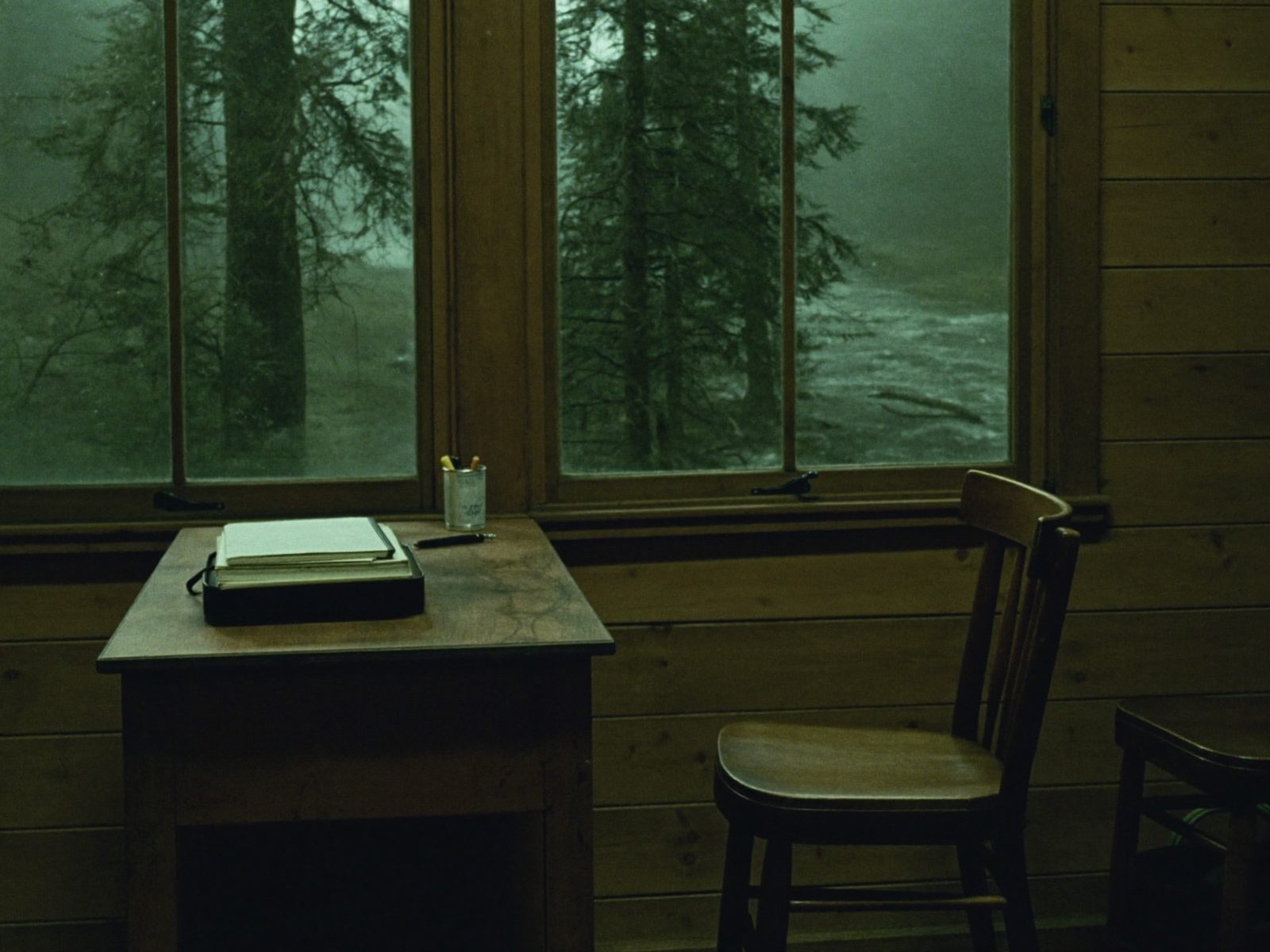
AI illustration · imagined scene, not an evidence photograph
File
CR-0066
Date
1 April 1929
Place
Chehalis (Sts'ailes), British Columbia, Canada
Record
Accounts gathered in Indigenous communities and retold for a settler readership
Evidence
A magazine article; and a provincial law library's search for the statute it implies
Agency
None found — and the provincial library records that it looked
Assessment
B · documented
The full file
On 1 April 1929 Maclean's Magazine published an article by J. W. Burns under the title "Introducing B.C.'s Hairy Giants", subtitled as a collection of strange tales about British Columbia's wild men, told by people who said they had seen them. Burns worked on the Chehalis reserve, home of the people now known as the Sts'ailes, on the Harrison River in the Fraser Valley, west of the resort of Harrison Hot Springs. The anthropologist Wayne Suttles, writing in the 1970s, called him a school teacher there and named him as "the writer who introduced the word" sasquatch to non-Indigenous readers across Canada and the United States. Other accounts, including BBC Travel and the Canadaland podcast, call him a government or Indian agent. Clare O'Reilly, an environmental-history student writing for NiCHE, places his teaching on the reserve in the 1920s and 1930s. The two descriptions may both be true, since Indian Affairs employed reserve teachers, but the sources differ in emphasis and this file has not found an employment record that settles it.
The word itself was not Burns's invention. It is his English rendering of a Halkomelem (Halq'eméylem) term used by the Sts'ailes and neighbouring Stó:lō communities, which BBC Travel gives as sasq'ets and O'Reilly, following Suttles, as se'sxac.
The article and where it survives
The primary evidence is the article, held in the Maclean's digital archive under its 1 April 1929 issue date. It retells encounters Burns gathered from Indigenous people. The best known, as quoted by O'Reilly, is credited to a man Burns calls Peter Williams, described for the magazine's readers as "a reliable as well as an intelligent Indian". Williams took the figure on a boulder for a crouching bear and raised his rifle, until it stood and yelled: a man about six and a half feet tall and covered with hair. When he told the village elders, Burns wrote, they "seemed not to wish the story to gain further publicity". The article published it regardless. No other physical record is attached to the case. Courthouse Libraries BC, asked whether the creature appears anywhere in provincial law, reports that its librarians found no statute naming a sasquatch under any spelling.
What scholars concluded
Suttles gave the fullest academic account. In a paper read to the American Folklore Society in Portland in November 1974, he set out how the word reached outsiders: Harrison Hot Springs took up the sasquatch as an advertising device and held local celebrations called Sasquatch Days, after which interest faded until 1957, when the town staged a sasquatch hunt as its project for British Columbia's 1958 centennial. That brought in John Green, editor of the Agassiz weekly paper, whose books from 1968 onwards turned a local word into a continental file. Suttles's survey of Coast Salish material found not one creature but several names for sasquatch-like beings, given attributes that contradicted one another and differed from what non-Indigenous writers ascribed to the sasquatch. He concluded that the cultural evidence "did not add up to a case for the existence of a real animal", while declining to rule one out.
Later writing has taken up the other half of the story. O'Reilly reads the 1929 article as the point at which a being closer to a person than to an animal was recast for a settler readership, and notes that Green himself said the sasquatch of Burns's readers was "basically giant Indians". BBC Travel's 2022 report quotes the Sts'ailes councillor Kelsey Charlie tracing the word to a mountain, Sasq'ets Tel, where the beings gather, and describing the sasq'ets as a shapeshifter that walks in both the spiritual and the physical realm.
The leading conventional explanation
The conventional account is that "sasquatch" is a loanword, introduced to English by one writer in one magazine, which later attached itself to an unrelated question: whether a large unknown primate lives in the Pacific Northwest. Its strengths are that it rests on a dated publication, that Suttles, a specialist in Coast Salish languages, accepted Burns as the point of entry, and that the later steps are documented: the resort's festival, the 1957 hunt, Green's books, and from 1958 the separate American word Bigfoot. Its weakness is that it explains the word, not the reports. It does not account for individual encounters, Indigenous or settler, and it relies on secondary retellings of the 1929 text rather than on any surviving notes of Burns's sources.
What remains disputed
The form and meaning of the source word are not agreed. O'Reilly gives "wild man"; BBC Travel and other accounts give "hairy man". Some popular accounts say Burns misspelled or mispronounced the word, which no source opened here demonstrates from his own text. Sasquatch Days are dated to 1938 by both BBC Travel and Destination Fraser Valley, the latter citing more than 2,000 First Nations attendees, yet no contemporaneous newspaper report of that first event has been opened for this file. Burns's exact post remains described two ways. The elders' reluctance is known only through Burns's own sentence.
Sources
Some Questions About the Sasquatch(archived) — Wayne Suttles, paper read 1974, UBC Working Papers in Linguistics archive, 1976. Burns as teacher at Chehalis and introducer of the word; Sasquatch Days; the 1957 hunt; John Green; the cultural-evidence conclusion.
The true origin of Sasquatch(archived) — Lisa Kadane, BBC Travel, 2022. Sasq'ets and "hairy man"; Kelsey Charlie's account; Sasquatch Days since 1938; Burns as government agent.
Sasquatch Days in Harrison Hot Springs — Destination Fraser Valley, 2025. The 1938 first event and its attendance; co-hosting by the village and the Sts'ailes today.
Corrected The full file: Clare O'Reilly wrote the NiCHE essay as an environmental-history master's student, not as a NiCHE historian; the text now describes her that way.
Sources The full file: Wayne Suttles's paper is titled 'Some Questions About the Sasquatch'; the source list now gives the full title.
Sources The full file: The Courthouse Libraries BC page carries no revision date that could be confirmed; the source line no longer says 'revised 2024'.
Corrected The Salish term behind the word is now glossed as wild man or hairy man; the file previously gave wild man alone.
Added The full file, a long-form write-up with its sources, added.

 INDEPENDENT FIELD ARCHIVE