The full file
On Saturday 20 May 1967, the long weekend, Stefan Michalak, an industrial mechanic from Winnipeg who prospected as a hobby, came out of the bush north of Falcon Beach, Manitoba, with burns on his chest and abdomen and a story about two glowing craft. Within days the Royal Canadian Mounted Police (RCMP), the Royal Canadian Air Force (RCAF), federal health officials and, later, the University of Colorado UFO Project were all looking into it. The burns were real. What caused them was never settled.
The encounter and the first report
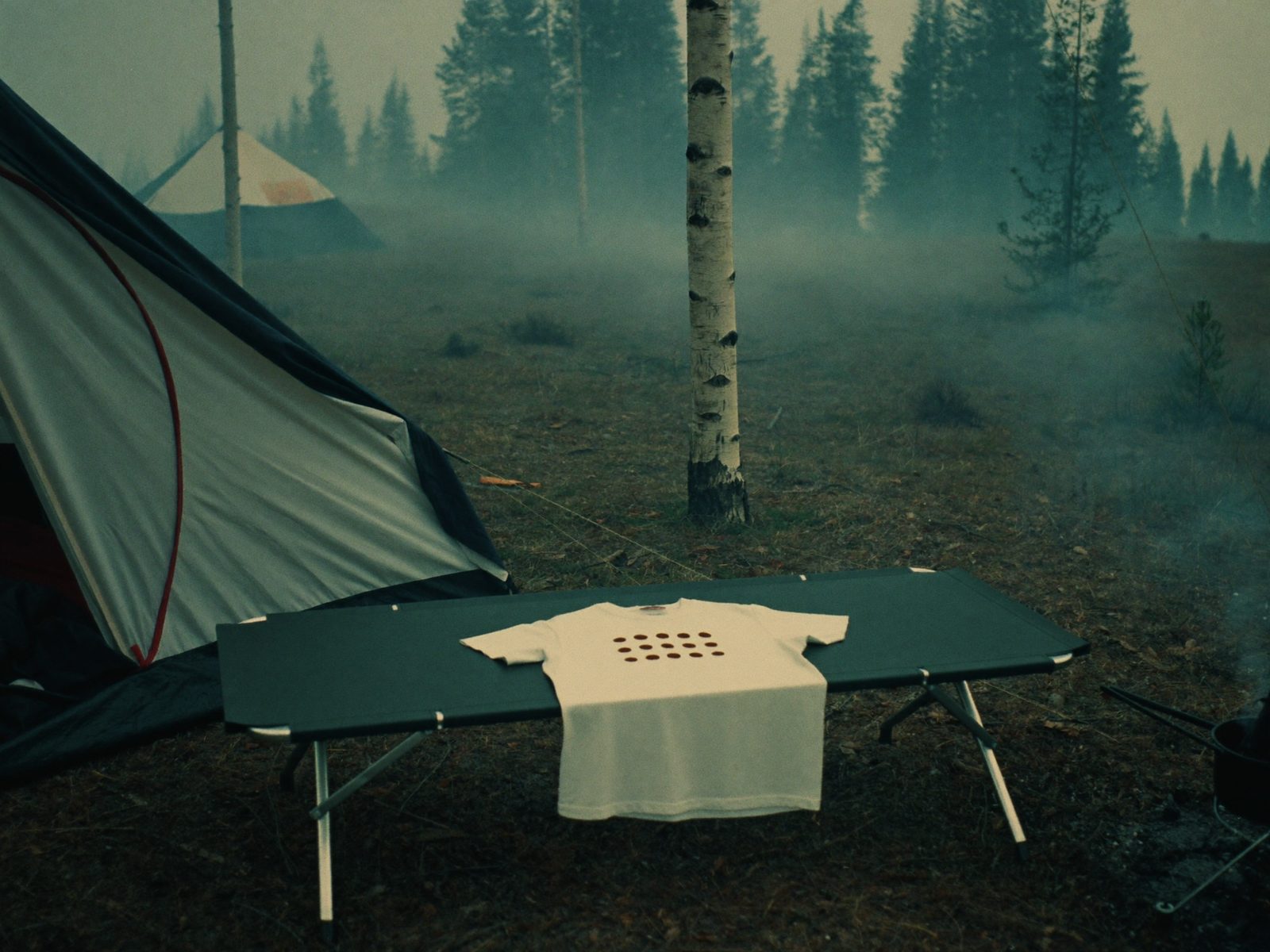
Michalak said he was chipping at a quartz vein about noon when geese startled him and he saw two red, glowing objects descend. One left; the other settled on a flat rock, which the Condon account puts at about 160 feet away and the RCMP's site report at about 200. He described warm air, a smell of sulphur, a hissing sound and an open hatch. He touched the hull with a gloved hand, the craft turned, and a blast from a panel of holes set his shirt and cap alight. His age is given as 50 in the Condon account and 51 by the CBC.
He reported it the same afternoon. The RCMP's file of 26 May records that he flagged down Constable Solotki of the Falcon Beach Highway Patrol on the Trans-Canada Highway at about 3 pm. Solotki thought he looked as if he "had been on a drunk", saw a burn on the back of his cap but none on his head, and was refused a look at the shirt. The Condon account says the constable thought him intoxicated and "refused to help"; the RCMP file says Michalak backed away whenever Solotki approached. That evening, back in Winnipeg by bus, Michalak was treated as an outpatient at Misericordia Hospital. When two RCMP officers saw the burn on 23 May they described a blotchy patch about a foot across that "resembled an exceptionally severe sunburn".
What evidence exists
The record is unusually thick for a single-witness case. The RCMP reports of 26 May and 10 August 1967 are held at Library and Archives Canada, with the federal sighting files. The Winnipeg Cancer Research Clinic found no radioactivity on Michalak's skin, undershirt or cap. A radiation pathologist called the burn thermal, and a whole-body count a week later was normal. The burns later became raised sores in a grid-like pattern, the image most often reproduced.
On 25 June Michalak returned to the site with an acquaintance, Gerald Hart, and removed the remains of his outer shirt, a steel tape, moss and soil, although the RCMP had asked him to leave everything in place. The Department of National Health and Welfare found the soil highly radioactive. On 28 July its radiation officer, Stuart Hunt, visited the site with police and RCAF officers. He found radium-226 confined to a crack in the rock inside a roughly 15-foot circle where the moss was missing, and judged it no danger to the public. Two pieces of nearly pure silver found in a fissure a year later carried a coating of crushed pitchblende ore. Clothing from the case, including a burned shirt and hat, is now in the University of Manitoba Archives, donated by the researcher Chris Rutkowski in 2019.
What investigators concluded
The RCMP closed its file in August 1967 with an even-handed summary. It listed discrepancies: the beer the Falcon Beach motel's bar operator said Michalak drank, his aimless wandering on early searches, his removal of evidence, and a departure bearing given first as 255° and later, at the site, as 020°. It also recorded "certain facts that cannot be denied and cannot be accounted for", namely his illness, weight loss, blood-count changes, burns and the circle on the rock. The investigating RCAF officer, Squadron Leader Paul Bissky, first suggested an alcohol-induced hallucination, according to Library and Archives Canada, and later said he could not reach a firm conclusion.
The Condon Committee, which logged it as Case 22, found "many inconsistencies and incongruities" and concluded that the case "does not offer probative information regarding inconventional craft". It printed the view of R. J. Traill, a mineralogist at Canada's National Research Council, that the silver had been dropped into sand while hot and later coated with ore, and thought it improbable that earlier, thorough searches would have missed it.
The conventional explanation
The leading conventional explanation is an ordinary accident, possibly while Michalak had been drinking, wrapped in a story that, as the sceptic Aaron Sakulich argues, also served to keep rival prospectors off his silver claims. Its strengths: the first officer's impression, the beer dispute, the reversed compass bearing, evidence handled by the witness alone, contamination that Hunt thought might be luminous radium paint, silver bearing natural uranium ore, and claim markers around the landing site. Its weaknesses: no one has identified the ordinary thing that burned him in that pattern, the medical work found no mental illness, and the RCMP's own laboratory doubted the luminous-paint idea because such paint was by then rare.
What remains disputed
The burns, the illness and the circle on the rock were documented and never explained by any agency. Whether the craft existed rests on Michalak's word alone. Accounts of the silver diverge: the analysis found the metal non-radioactive under a radioactive coating, which Sakulich omits, while Rutkowski told the CBC it remains radioactive. A 1968 Mayo Clinic psychiatric assessment is known mainly through Rutkowski, who said it found Michalak down to earth.
Sources
- RCMP report, Stefan Michalak, 26 May 1967 — Royal Canadian Mounted Police, Winnipeg G.I.S., via Library and Archives Canada, 1967. Solotki's encounter, the hospital visit, the burn, the radioactivity checks and the 25 May search.
- RCMP report, Stefan Michalak, 10 August 1967 — Royal Canadian Mounted Police, via Library and Archives Canada, 1967. The return with Hart, Health and Welfare's findings, Hunt's site visit, the discrepancies and the closing summary.
- Condon Report, Case 22: Claim of UFO Landing (archived) — University of Colorado, Scientific Study of Unidentified Flying Objects, 1968 (transcribed by NCAS). Medical findings, the silver analysis and the project's conclusion.
- UFOs at LAC: The Falcon Lake incident, part 2 (archived) — Library and Archives Canada, 2019. Bissky's view, the federal records and official positions.
- Falcon Lake incident is Canada's 'best-documented UFO case,' even 50 years later (archived) — Darren Bernhardt, CBC News, 2017. Michalak's account, the grid-pattern sores and the Mayo Clinic visit.
- The University of Manitoba's archive of the paranormal (archived) — University Affairs, 2020. The Rutkowski donation and the burned shirt and hat.
- Stefan Michalak's Story: No Aliens Required (archived) — Aaron Sakulich, The Iron Skeptic, undated. The sceptical reading: alcohol, accident and the claim-protection motive.

 INDEPENDENT FIELD ARCHIVE