The reports are real enough to have their own filing: Devon & Cornwall Police released the actual incident entries under freedom of information in 2025, and UK forces took 155 big-cat reports in three years. What has never been produced is an animal. A 2009 beach carcass billed as the Beast was identified as a grey seal, and when a deer killed at Woodchester Park in Gloucestershire was tested at Warwick University in 2012, 450 PCR tests found no cat DNA at all — only fox. Exotic cats do escape; a breeding population has never been shown.
The 1983 Royal Marines stake-out is widely reported. No government statement confirming it has been found.
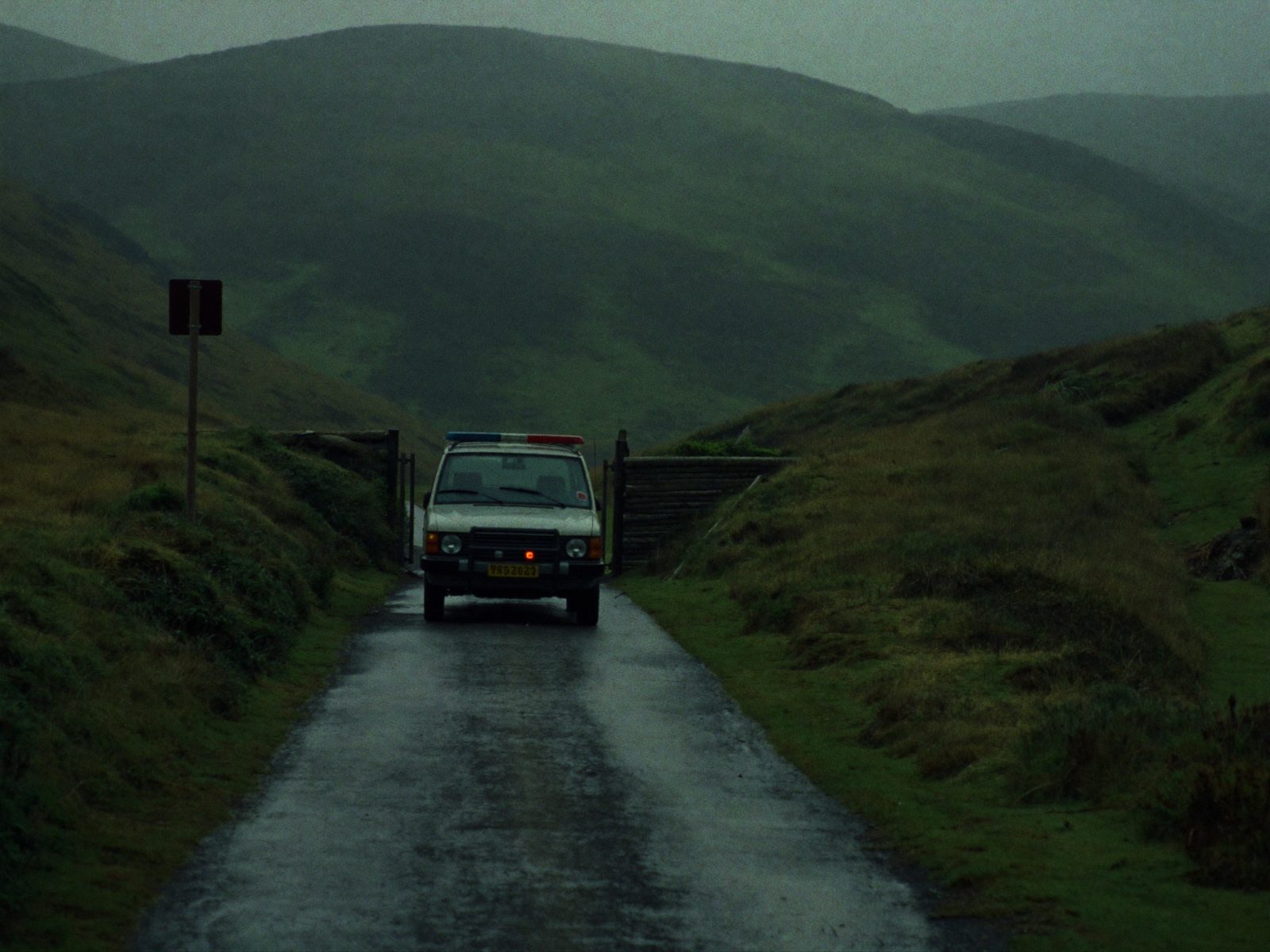
AI illustration · imagined scene, not an evidence photograph
File
CR-0050
Date
1970s → 1983
Place
Devon and Somerset, England
Record
farmers, drivers and walkers, over four decades
Evidence
Police incident entries released under FOI; photographs with no scale reference
Agency
Devon & Cornwall Police; DEFRA; University of Warwick
Assessment
D · no verified animal
The full file
Reports of a large cat on Exmoor, the moorland that straddles north Devon and west Somerset, go back to the early 1970s. They stayed local until 1983, when sheep losses near South Molton, on the Devon edge of the moor, made the story national and Royal Marines were sent onto the hills. No animal was found then, and none has been caught since.
What was reported
A farmer near South Molton reported more than a hundred sheep killed over about three months, their throats torn, and the Daily Express offered a reward for video footage. Of what followed, The Week (2014) says Royal Marines snipers watched the hills for three nights before the Ministry of Defence ended the search, fearing they might shoot one of the amateur photographers on the same hunt. The Observer (2019) says only that a team of Marines was deployed and failed to catch a cat. Both were written decades later and cite no official document; popular claims of a six-month deployment have no reliable support.
Few witnesses are on record. According to The Week, after the search ended the Express reported that its only witness was a 16-year-old girl being driven to work, who said of the animal: "It was black and had a long tail." In her book on the beast, Di Francis told of a Marine sniper who had the animal in his sights but did not fire because he judged it out of range; pacing it out afterwards, he found it had been well within range. Retelling it in 2001, the Guardian concluded the animal was probably smaller and closer than he thought.
The evidence and where it is held
No body, bone or hair from 1983 is known to exist; what survives is paper. The North Devon Record Office, part of the South West Heritage Trust, holds a 1983 file of correspondence about the Daily Express article on the beast, among the papers of Bishop's Nympton parish, next door to South Molton. The Week says that tracks found at the time were believed by the authorities to be a panther's; only that one source makes the claim.
The modern record is a police one. In 2025, in answer to a freedom of information request reported that May, Devon and Cornwall Police released the incident entries for big-cat reports in the two counties since January 2021: thirteen, in which officers went out in person six times. One of them was a November 2021 call from South Molton reporting a lion; the zoos were checked. LBC reports that every big cat was accounted for, while Totnes Today's text says Exmoor Zoo reported "lions on the loose", which looks like a dropped "no".
The one carcass offered as the beast was not a cat. In January 2009 a decomposing animal washed up on Croyde beach in north Devon, and national newspapers suggested it might be the Beast of Exmoor. From the skull and a flipper recovered by the Centre for Fortean Zoology, the zoologist Darren Naish identified it as a grey seal. The Week later wrote that tissue samples had shown it to be a seal; Naish's identification rests on skull anatomy, not DNA.
What investigators concluded
No official inquiry into the Exmoor killings themselves has been found. The nearest is the Ministry of Agriculture's 1995 investigation of the Beast of Bodmin Moor in Cornwall, carried out by the consultancy ADAS. In the Commons in February 1998 Elliot Morley, parliamentary secretary at the Ministry of Agriculture, summarised its findings: the photographs and video showed domestic cats, the footprints were those of cats and dogs, and no livestock death that was followed up showed signs of a big cat. He added that none of the ministry's investigations had produced "any firm evidence of the existence of big cats living in the wild". In 2019 the Department for Environment, Food and Rural Affairs told the Observer that neither it nor Natural England had received credible reports of wild-living or breeding big cats.
The conventional explanation
The leading explanation is misidentification: domestic cats and dogs seen at a distance that cannot be judged, with sheep killed by dogs or scavenged after death by foxes, badgers and crows. Its strength is that it has been tested where it could be. At Bodmin, investigators photographed a gatepost in a well-known "beast" picture with a one-metre ranging pole beside it, and the cat shrank to about 30 centimetres at the shoulder. At Woodchester Park in Gloucestershire in 2012, the University of Warwick ran 450 PCR tests on samples from a roe-deer carcass thought to be a big-cat kill, and from a second deer found nearby, and found fox DNA and no cat DNA. Its weakness is that none of this was done on Exmoor in 1983, and real escapes happen: Morley told the Commons that sixteen big cats had escaped since 1977, two of them staying free for more than a day, among them a puma captured near Inverness in 1980.
What remains unexplained or disputed
What killed the 1983 sheep has never been settled, because no published examination of the carcasses exists. Who ordered the Marines out, for how long and on what authority is not confirmed by any government record found here. The 1983 correspondence in the North Devon file is catalogued but not described. What the record does not show, on Exmoor or anywhere else in Britain, is a breeding population of big cats.
On the trail of Britain's wild big cats — Mark Wilding, The Observer, 2019. The Marines' deployment after more than 100 sheep deaths, the 1995 Bodmin finding and Defra's position.
It's a lion... no it's a cat — David Hambling, The Guardian, 2001. Di Francis's account of the Marine sniper and how badly people judge size and distance.
Cat's out of the bag?(archived) — David Clarke, Sheffield Hallam University folklorist, 2014. The ADAS method at Bodmin, including the ranging-pole photographs.
Corrected The full file: The police figures were described as released in May 2025; the sources show only that they were reported that May, and the text now says they were released in 2025 and reported that May.
Corrected The full file: The Woodchester DNA work was described as tests on one roe-deer carcass; the University of Warwick took its samples from that carcass and a second deer found nearby, and the text now says so.
Corrected The full file: Elliot Morley was called the agriculture minister; Hansard gives him as parliamentary secretary to the Ministry of Agriculture, and the text now uses that title.
Sources The full file: The Hansard source pointed to a Wayback Machine copy that turns away scripted requests; it now links to the same debate on the official Parliament site, which is still live.
Corrected The Warwick University test was on a deer killed at Woodchester Park, Gloucestershire, in 2012; the file previously read as if it were an Exmoor kill. The 450 tests were PCR tests, and the seal identification no longer claims to rest on samples.
Added The full file, a long-form write-up with its sources, added.

 INDEPENDENT FIELD ARCHIVE