The full file
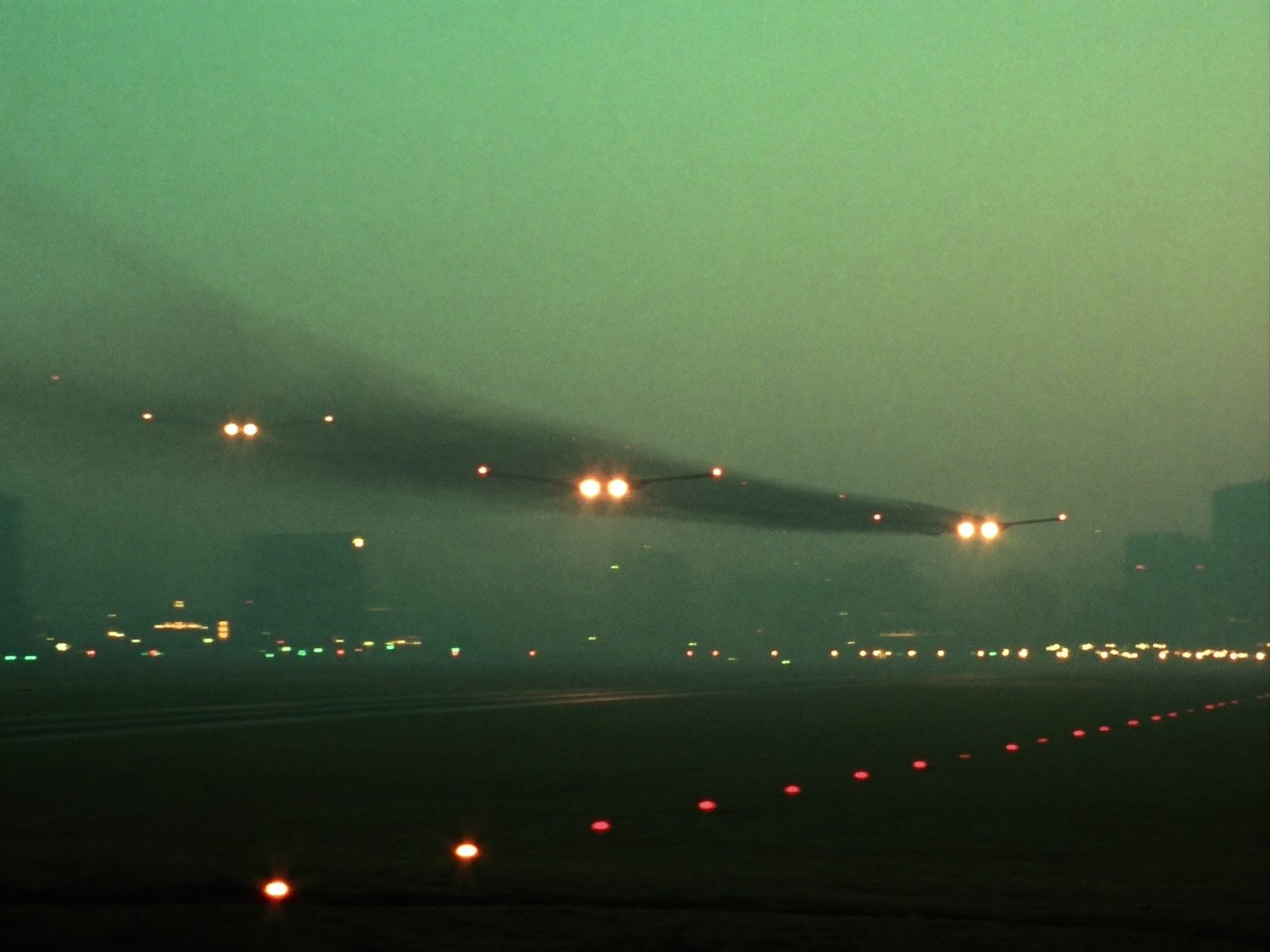
At about 20:15 local time on Monday 19 May 1986, the control tower at São José dos Campos, between São Paulo and Rio de Janeiro, reported lights over the city, mostly red but turning yellow, green and orange. São Paulo approach radar confirmed contacts there. A controller on duty that night has since been named as Sérgio Mota da Silva. At 21:08 the pilot of a Xingu executive turboprop, registration PT-MBZ, inbound from Brasília, saw lights south-east of the city moving from east to west. They looked, he said, like estrelas grandes e vermelhas, big red stars. He tried on his own initiative to close on them and could not. Later accounts identify him as Ozires Silva, founder of Embraer, who was due to take over as president of Petrobras; a Ministry of Justice account quoted by CNN Brasil instead names the pilot as Alcir Pereira.
Five fighters
At 21:39 the head of the Air Defence Operations Centre (CODA) ordered the alert aircraft at Santa Cruz air base, near Rio, into the air, on the strength of radar plots near São José dos Campos. At 22:10 the approach radar at Anápolis, in Goiás, reported echoes that the military operations centre's own screens were not showing, and the Anápolis alert was raised a minute later.
The pilot of the first Santa Cruz fighter, an F-5E, levelled at 17,000 feet and saw a white light below him. It rose to sit about ten degrees above him, and he followed it up to 33,000 feet as it turned briefly red, green and white again. His onboard radar held a contact 10 to 12 miles away, matching what he saw. He followed it out to sea for about 180 miles from Santa Cruz, then broke off, low on fuel and not gaining.
At 22:48 a Mirage left Anápolis. Its pilot made five runs and locked onto a target each time with his radar, once getting within two miles, but never saw anything. The target zigzagged or turned hard right and pulled away even when he was supersonic. At 22:50 a second F-5E left Santa Cruz and its pilot saw a red light where the ground controllers had placed a radar plot. After a few minutes the light went out and the radar contact went with it. For a moment thirteen plots appeared behind his aircraft; he turned through 180 degrees and found nothing. Two more Mirages left Anápolis at 23:17 and 23:36 and made no contact. The last aircraft landed at 00:30 on 20 May.
The record
That sequence comes from an eight-page Relatório de Ocorrências, marked confidential and dated 2 June 1986, signed by Brigadier José Pessoa Cavalcanti de Albuquerque, interim commander of the air defence command (COMDA). It is held by the Arquivo Nacional, which publishes a scan through its SIAN catalogue. The government gives its release date as 25 September 2009; further records followed in 2015.
The report names no witnesses, pilots or aircraft types. The widely repeated figure of 21 objects is not in it. That number comes from the press conference given on 23 May 1986 by the Minister of Aeronautics, Brigadier Octávio Júlio Moreira Lima, who appeared with the pilots and controllers. He said five fighters had chased 21 objects, and added: "Tecnicamente, diria aos senhores que não temos explicação" ("Technically, I would tell you that we have no explanation"). He promised a full dossier within thirty days.
What the Air Force concluded
The report is dated within those thirty days but stayed confidential for 23 years. It says the command kept to a plain narrative so as not to invite speculation, then lists the phenomena's features: echoes on ground and airborne radar matching pilots' sightings, speeds from hovering to supersonic, heights from below 5,000 to above 40,000 feet, and sudden acceleration. It concludes that they "são sólidos e refletem de certa forma inteligência", solid and in some way intelligent, because they kept their distance from observers and flew in formation, though not necessarily manned. No later official study is known.
The conventional explanation
The leading conventional reading is a mixture: bright stars, planets or other ordinary lights, together with weak or spurious radar returns. The report itself supports part of this. It says the radars were air traffic control sets, not built for air defence, the contacts too weak to track, and the plots near São José dos Campos "não tendo se constituidos em ecos radar definidos", never firmed into defined echoes. The Anápolis returns did not appear on the operations centre's screens at all. Mota said his superiors spoke of electronic warfare, an idea he rejects.
The weakness is that this reading has never been worked through against the records. The report describes airborne radar locks matching what pilots saw, and a light that went out as its radar contact was lost. No published analysis has matched these to particular stars, aircraft or propagation conditions. The few alternatives in print, such as solar activity, come from UFO-research journals and are untested.
What remains open
No radar recordings have been published, only the report's summary and the archived audio. The ground contacts were weak, so the case turns on the pilots' onboard sets, which no one outside the Air Force has examined. The report does not say whether its 180 miles are nautical, so the chase's length is given variously. The Air Force has said it has no specialists to give opinions on such events, and the file has stayed open since.
Sources
- Relatório de Ocorrências, Comando de Defesa Aérea, 2 June 1986 (archived) — Ministério da Aeronáutica, held by the Arquivo Nacional. The timeline, the interceptions, the radar limitations and the conclusion.
- Official UFO Night in Brazil (archived) — Government of Brazil, 2022. The press conference date and words, 21 objects, the 30-day promise, the 2009 release, and the transfer of files to the National Archive.
- Noite dos Óvnis: mistério que intriga o Brasil completa 40 anos (archived) — Olhar Digital, 2026. The minister's words in Portuguese, the signatory, and the Air Force's statement that it has no specialists.
- Há 35 anos, Noite dos Discos Voadores assustou moradores (archived) — Camilla Millan, Rolling Stone Brasil, 2021. Names Sérgio Mota da Silva, the 2009 release, further records in 2015, and the electronic warfare remark.
- Noite dos óvnis: Brasil já teve caças da FAB perseguindo objetos voadores (archived) — CNN Brasil, 2023. Five jets, CINDACTA detections, the signatory, the archive's holdings including audio, and the Ministry of Justice account naming Alcir Pereira.
- 1986 Brazilian UFO incident (archived) — Wikipedia, used as an index. Aircraft types and callsigns, and the identification of Ozires Silva as the Xingu pilot.

 INDEPENDENT FIELD ARCHIVE