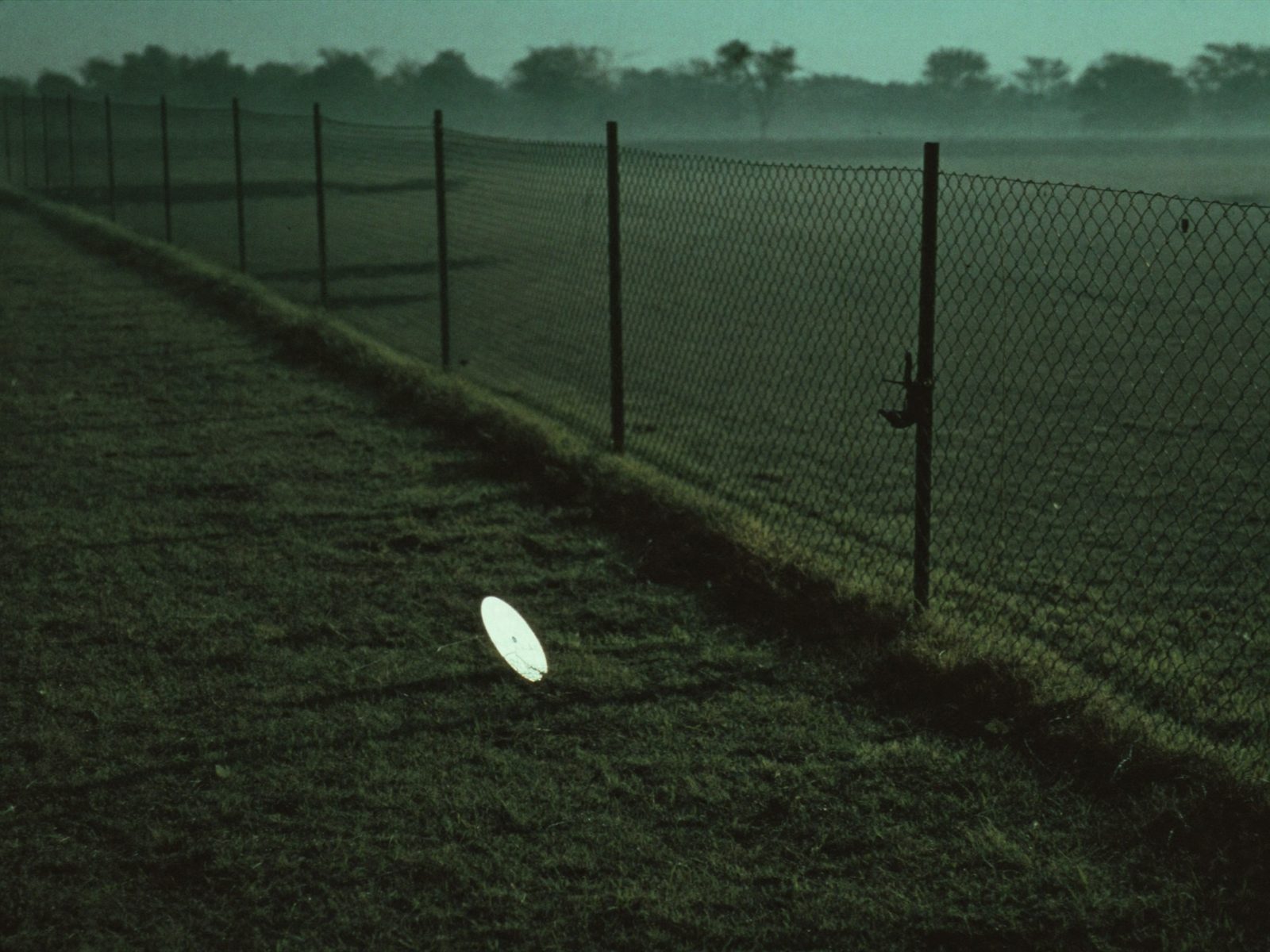
A fireball over southern Africa two days earlier had already put the subject on the radio. Then a silver object came down in the field beside the school, and sixty-two children between six and twelve said they saw figures in black. In later interviews with the psychiatrist John Mack, several said the figures had warned them, by thought, about damage to the environment.
File this under unexplained, not under solved. The week before is the problem.
62 pupils of Ariel School aged six to twelve; not every child present that morning reported anything
Evidence
Interviews recorded by several visiting researchers and broadcasters, and the children's drawings; no instrument, no photograph, no official investigation
Agency
No official body — researchers interviewed the children
Assessment
B · many witnesses, no hard evidence
The full file
On the morning of Friday 16 September 1994, during the mid-morning break at Ariel School, a fee-paying primary school outside Ruwa, east of Harare, a group of pupils said they had watched something come down in the rough bush beyond their playing field. The figure that has stayed with the case is sixty-two children, aged roughly six to twelve. The staff were indoors at a meeting and saw nothing. The pupils described three or four disc-like objects moving in along the power lines and settling in the scrub, and one or more small figures in black, about a metre tall, with long dark hair and large elongated eyes. Some of the black pupils took the figures for zvikwambo or tokoloshes, goblins from local folklore; others drew flying saucers.
What was reported
The children told teachers, who were dismissive, and then their parents. Tim Leach, the BBC's correspondent in Zimbabwe, alerted Cynthia Hind, and within days the school had visits from a South African Broadcasting Corporation crew and from Hind herself, the Mutual UFO Network's representative in Africa, who logged it as her case 96. Hind talked to the children in small groups and had them draw what they had seen. In November the Harvard psychiatrist John Mack, who had been contacted through Leach, came with his research assistant Dominique Callimanopulos and interviewed twelve pupils on camera, with the headmaster, Colin Mackie, among the adults present.
How many children were outside is not settled. The Mail & Guardian put the whole school at more than 110 children and staff; later sceptical accounts put the number in the playground at about 250, which would mean roughly three-quarters reported nothing.
What evidence exists
There is no photograph, no instrument record, no physical trace and no official inquiry; no Zimbabwean authority is known to have investigated. The record consists of the children's drawings, Hind's notes and published accounts, contemporary broadcast interviews, and Mack's videotaped sessions. Hind died in 2000 and Mack in 2004. Mack's papers, some 150 boxes, were given to the Archives of the Impossible at Rice University in Houston, and according to the researcher Gideon Reid the Ariel interviews, transcribed at 104 pages, are among them. Reid reports that in 2023 the archive said the tapes had been digitised and would ultimately be released, but that as of July 2026 they had not been opened to him. Only excerpts have been seen publicly, in documentaries from Sightings in the 1990s to Ariel Phenomenon (2022) and Netflix's Encounters (2023).
What investigators concluded
Hind and Mack both treated the event as a genuine encounter. Mack reported that several children described the beings conveying, by thought, a warning about technology and damage to the environment, and he presented the case as one of the strongest on record. The case's sceptics, among them Brian Dunning and Reid, point out that this environmental message does not appear in the reports from the first weeks and surfaced only after Mack's interviews, some ten weeks on, by which time the children had spent weeks discussing the event among themselves and with adults. Hind's group interviews, in which children heard one another's answers, are criticised on the same grounds.
The leading conventional explanation
The usual reading is mass hysteria, or social contagion, set off by a specific prompt. On the night of 14 September, two days earlier, a bright object with trailing fragments was seen across southern Africa, and ZBC radio invited listeners to call in. Astronomers quoted at the time called it a meteor shower; Jonathan McDowell's satellite catalogue records the second stage of the Zenit-2 rocket that launched the Russian Kosmos 2290 satellite as re-entering on that date. Either way, the country was talking about UFOs when the children went out to play. A 2011 review of mass hysteria in African schools in the Malawi Medical Journal cites the Ariel report among its examples and finds that such outbreaks typically affect pre-adolescent and adolescent pupils and spread by rumour and media coverage.
The strength of this reading is that it accounts for the timing, the partial participation and the drift of the story over ten weeks. Reid has added a documented media context: Zimbabwean television in 1994 carried UFO and alien programmes, including the CBS mini-series Intruders, broadcast that February. The weakness is that contagion explains how a story spread, not what started it. Reid himself concludes there was probably a real physical stimulus. Proposals for what that stimulus was include travelling puppet performers (Reid) and, more loosely, passing strangers or a stray balloon (Dunning); none has been confirmed.
What remains disputed
Several former pupils, interviewed as adults, have stood by what they saw. In Encounters one former pupil, Dallyn, said he had invented the sighting with a friend by pointing at a sunlit rock and calling it a spaceship; his claim has not been independently confirmed, and other former pupils reject it. The core questions remain open: what the children saw beyond the field, how many saw anything at all, and how much of the telepathic message belongs to September rather than November. Mack's full interviews would answer part of that, and they are still unpublished.
Corrected The full file: The account of how Cynthia Hind heard of the case now follows Skeptoid: Tim Leach, the BBC's Zimbabwe correspondent, alerted Hind. The earlier text listed Leach among the visitors to the school, which no cited source supports.
Corrected The full file: The rocket that launched Kosmos 2290 in August 1994 is now called Russian, as Gideon Reid's article has it, not Soviet-era.
Corrected The full file: The proposed physical causes now match the cited sources: travelling puppet performers (Reid), and passing strangers or a stray balloon (Dunning). A dust devil and a prank, which no cited source mentions, were removed.
Corrected A single fireball two days earlier had put the subject on the radio, not two days of fireball reports.
Corrected The children were interviewed by several researchers and broadcasters, not two, and their drawings are now listed as evidence.
Corrected The figures' warning about the environment, given by thought, comes from later interviews with the psychiatrist John Mack; the file previously presented it as part of the first reports.
Sources The source on file is now a Mail & Guardian article of September 2014 rather than an encyclopedia article.
Added The full file, a long-form write-up with its sources, added.

 INDEPENDENT FIELD ARCHIVE