Psychic research / Stanford Research Institute, Menlo Park, California · target: a Soviet research and test site near Semipalatinsk, Kazakh SSR
The Crane at URDF-3
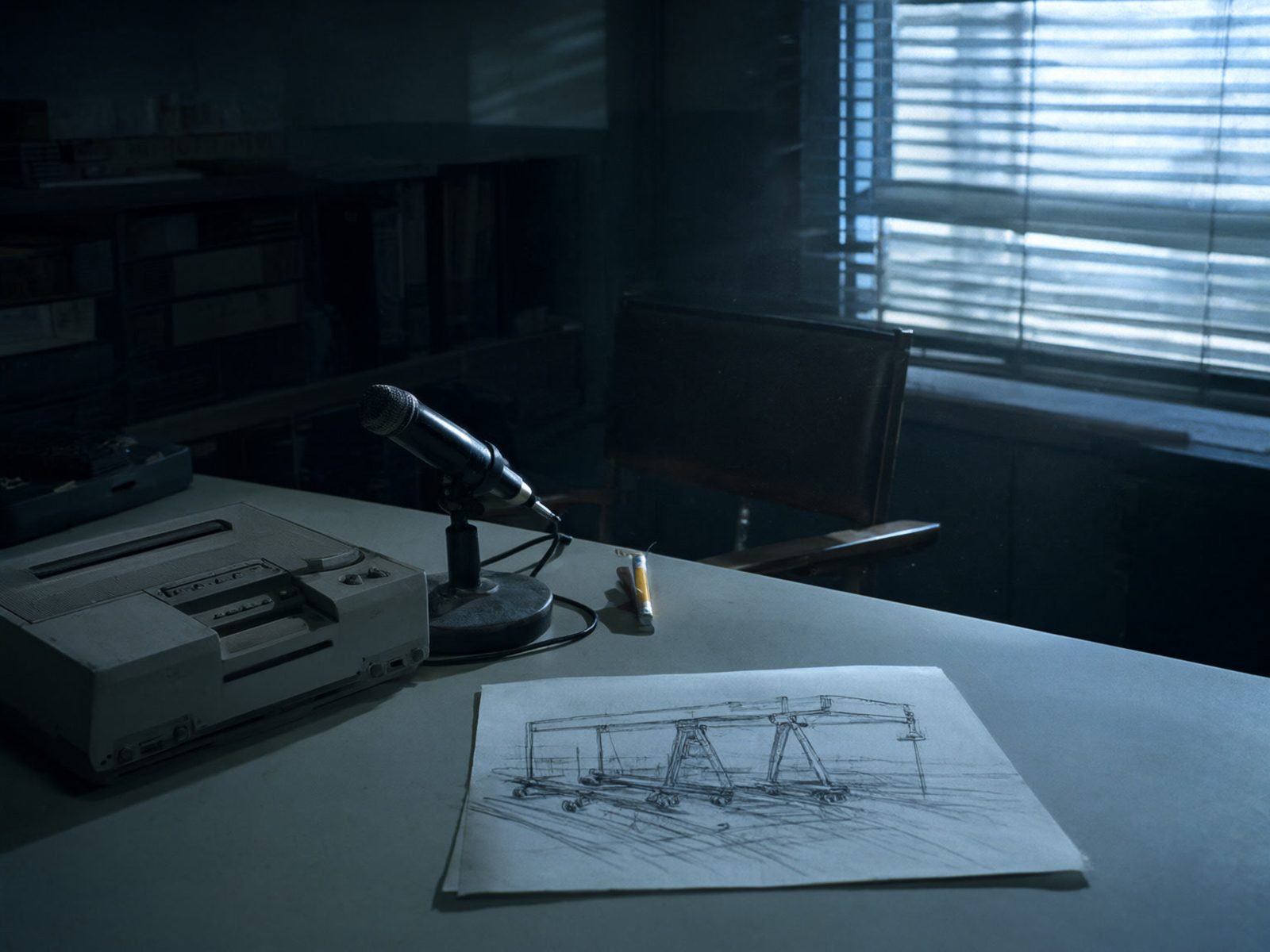
In July 1974 the CIA tested whether Pat Price, working with SRI, could describe a Soviet research site from its map coordinates. He drew a rail-mounted gantry crane that two analysts judged accurate, but by Kress's account "most of Price's data were wrong or could not be evaluated", and of the two test features Kress had chosen in advance, the crane and four derrick-like structures, he never described the derricks. The analysis of the session record concluded that the experiment was unsuccessful.
The analysis itself names the conventional explanations. After the first day Price "was contacted by phone that evening by one of the experimenters and was told to concentrate on the crane". The experiment "was not controlled to discount the possibility that Price could talk to other people". And anyone who named enough objects "would surely hit on one object that is actually present". The analyst could neither exclude nor confirm that Price had been told what to draw, so the crane remains unresolved.
AI illustration · not an evidence photograph
File
BR-0014
Date
9–11 and 15 July 1974 · analysed 4 December 1975
Place
Stanford Research Institute, Menlo Park, California · target: a Soviet research and test site near Semipalatinsk, Kazakh SSR
AssessmentB · documented: the session tapes and sketches were analysed for the CIA, and the sponsor's account survives
The record on file
Witnesses
The viewer Pat Price; the SRI experimenters Russell Targ and Harold Puthoff; Kenneth Kress, the CIA sponsor, who chose the test features in advance
Evidence
A 34-page analysis of the session record: two cassette tapes, 79 pages of transcripts and 30 sketches. Also Kress's own account in the CIA's Studies in Intelligence, Winter 1977
Record made at the time
An Analysis of a Remote-Viewing Experiment of URDF-3, dated 4 December 1975 and written from the session's tapes, transcripts and sketches (CIA-RDP96-00791R000200240001-0). Kress's footnotes attribute it to D. Stillman of Los Alamos Scientific Laboratory. Kress's own review, Parapsychology in Intelligence: A Personal Review and Conclusions, followed in Studies in Intelligence in Winter 1977 (CIA-RDP96-00791R000200030040-0).
Agency
CIA, with an analysis attributed by Kress to Los Alamos Scientific Laboratory
At eleven in the morning on 9 July 1974 at Stanford Research Institute in Menlo Park, the physicists Russell Targ and Harold Puthoff gave Pat Price, whom the CIA sponsor called their best subject, a pair of map coordinates. They showed him its position on maps about sixty miles west-south-west of Semipalatinsk in Soviet Kazakhstan, and described it as a scientific military research and test area. The site was known to American intelligence as URDF-3, the Unidentified Research and Development Facility-3; a June 1974 CIA memorandum preparing the experiment calls it a Soviet nuclear facility.
What was reported
The experiment was sponsored by Kenneth Kress of the CIA, who later wrote that he had studied reconnaissance photographs of the site and chosen two features in advance as the test: a tall crane and four structures resembling oil-well derricks. Describing both would qualify Price for real collection. The sessions ran on 9, 10, 11 and 15 July. On the first day Price described partly buried buildings, an antenna, a pool and a gantry crane. That evening, at 5.25 p.m., Puthoff telephoned him and asked for as exact a drawing as possible of the crane and its relation to the main building. On the second day, much of it conducted by telephone with only the experimenters' side recorded, Price drew a tall rail-mounted gantry crane. He never described the derricks, which the record also calls headframes. Kress wrote that because "the crane was so impressive", he and his branch chief relaxed the requirement and continued.
What evidence exists
Two records made at the time by people other than Price survive. The first is An Analysis of a Remote-Viewing Experiment of URDF-3, dated 4 December 1975, written from two cassette tapes, 79 pages of transcripts and 30 sketches, checked against imagery of the site. Kress attributes it to D. Stillman of Los Alamos Scientific Laboratory. The second is Kress's own account, Parapsychology in Intelligence: A Personal Review and Conclusions, in the CIA's classified journal Studies in Intelligence for Winter 1977. Both are in the CIA's declassified STARGATE collection, online in its reading room. One copy of the analysis names Price and carries release stamps from 2001; a second, approved in 2003, blanks out his name and the analyst's. The sketches survive only as poor scans in the analysis and Kress's article. The tapes themselves have not been released.
What investigators concluded
The analyst found the crane sketch "remarkably close in detail" to the real crane, and wrote that it was hard to explain unless Price had either seen it by remote viewing or been told what to draw by someone who knew the site. Almost everything else was wrong. Price drew two extra cranes, turned the real one through ninety degrees, and put the main building above ground. In reality it was underground, with the crane running on rails above it. On the third day the experimenters showed him a sketch of the actual site; he said only one of the four headframes was still there, which was untrue, and that the ground under the main building had nothing subterranean in it. The analysis concluded that the experiment "proved to be unsuccessful".
Kress reached a similar view. In his words, "most of Price's data were wrong or could not be evaluated", though a CIA photo interpreter and the Los Alamos analyst both judged the crane accurate. He recorded that agency research officers concluded that, with no control experiments, the data "were nothing but lucky guessing". Puthoff, writing in 1996, gave the opposite reading: the results held signal among the noise, several large structures were correctly described, and the work had been done double-blind.
The leading conventional explanation
The analysis itself supplies it, in two parts. The first is the multiple-guess effect: a subject who names enough objects "would surely hit on one object that is actually present". Price named a pool, a pole grid, an antenna, a dome, silos, a substation and three cranes; one crane was there. The second is leakage. The analyst noted that the experiment "was not controlled to discount the possibility that Price could talk to other people", that the overnight call had pointed him at the crane, and that the questions sometimes seemed to lead him. On the second day an experimenter told him by telephone that something as large as the crane stood west of the main building, which the analyst read as an attempt to get him to see the headframes, though he also judged the experimenters unfamiliar with the target.
The weakness of this explanation is that it does not fit the crane neatly. Price mentioned a gantry crane on the first afternoon, before the evening call, and the multiple-guess effect accounts for naming a crane, not for drawing a likeness that two analysts thought close. Kress wrote that Targ and Puthoff presumably knew nothing about the site when it began.
What remains disputed
Nobody can now settle where the crane came from. The analyst recommended that the tapes be put through a psychological stress evaluator, a voice-based lie-detection aid, and that future experiments record both ends of every phone call; the released record does not show whether either was done. Price died of a heart attack in July 1975, before the analysis was written. The record shows one striking detail in a session its sponsors judged a failure, run under conditions that can neither rule out ordinary explanations nor confirm them.
Corrected The full file: The 1975 analysis read the experimenter's call about something west of the main building as an attempt to get Price to see the headframes, but also judged the experimenters unfamiliar with the target; the text no longer says the call suggests they knew the target, and gives the analyst's view.
Corrected The full file: The analyst recommended a 'psychological stress evaluator', not a voice stress analyser by name; the text now uses his term.
Corrected The sessions ran on 9–11 and 15 July 1974, not four consecutive days from 9 July.
Corrected The crane Price drew was one of two features chosen in advance as the test; the other, four derrick-like structures, he never described. The file previously gave the derricks as the whole test.
Added The full file, a long-form write-up with its sources, added.
The Star Gate remote-viewing programmeThe Evaluation of Remote Viewing · CIA programme 1972–77, DIA from about 1985 · evaluation dated 29 September 1995

 INDEPENDENT FIELD ARCHIVE