Psychic research / Laboratories in several countries
The Ganzfeld Dispute
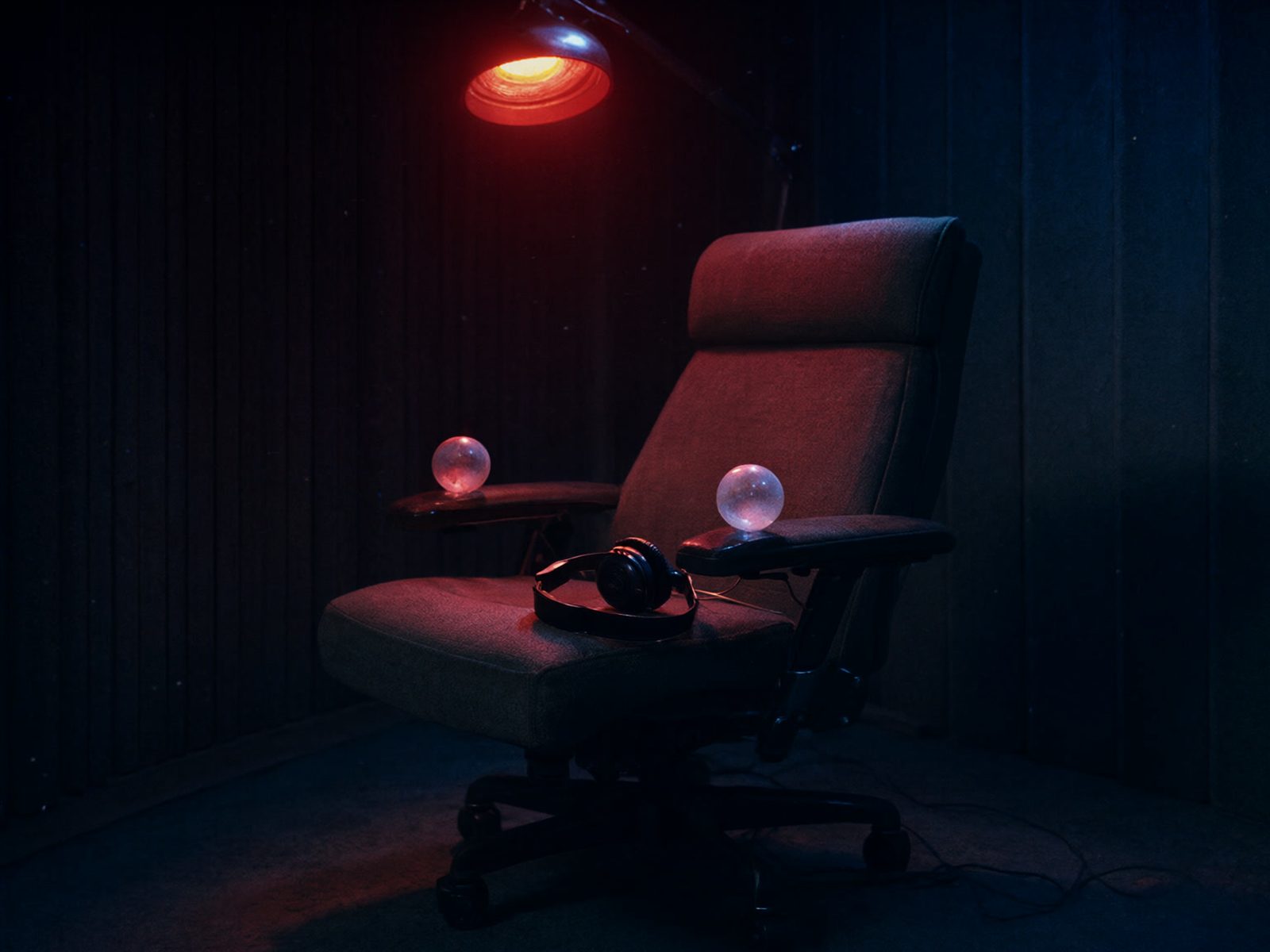
In the ganzfeld test a receiver in a reclining chair, eyes covered and listening to white noise, tries to pick out which of several pictures a sender in another room was shown (as described by the Psi Encyclopedia, quoting Bem and Honorton). In Psychological Bulletin, Bem and Honorton presented the method as replicable evidence in 1994. Milton and Wiseman's meta-analysis of 30 studies from 7 laboratories "failed to confirm" it in 1999, while later meta-analyses of 79 studies (2001) and of 29 studies (2010) again reported an effect.
The leading conventional explanations are study selection and randomisation. Hyman (2010) argued that the 2010 meta-analysis made its data look consistent ("manufacture apparent homogeneity") by eliminating outliers, and that an adequately powered study following its own recipe "failed to produce evidence for psi". Rouder and colleagues (2013) found the data favoured psi by about 6 billion to 1, but that "much of this effect" may reflect weak randomisation, falling to at most 330 to 1 once the manually randomised studies were dropped and studies the 2010 analysis had omitted were added. Neither side has conceded.
AI illustration · not an evidence photograph
File
BR-0020
Date
Experiments from about 1974 · debated in Psychological Bulletin 1994–2013
Place
Laboratories in several countries
AssessmentB · documented: published experiments, with the dispute conducted in one peer-reviewed journal
The record on file
Witnesses
Volunteer receivers and senders in many laboratories; reviewers on both sides, among them Charles Honorton, Daryl Bem, Ray Hyman, Milton and Wiseman, and Storm and colleagues
Evidence
Competing meta-analyses and comments in Psychological Bulletin: Bem and Honorton (1994), Milton and Wiseman (1999), Storm and Ertel (2001), Storm, Tressoldi and Di Risio (2010), Hyman (2010), and Rouder, Morey and Province (2013)
Record made at the time
Bem and Honorton, "Does psi exist?", Psychological Bulletin 115(1), 1994, reviewing the ganzfeld database and 11 new studies run to guidelines jointly authored by Hyman and Honorton; and the independent meta-analyses and comments that followed in the same journal up to 2013. Abstracts only were read for this entry.
Agency
Independent laboratories; reviewed in Psychological Bulletin
The ganzfeld experiments are not a single event but a body of laboratory work, run from the mid-1970s onward, and argued over in print for nearly forty years. Unusually for this shelf, the experiencers did not make the record at all. The people who tested them did, along with the critics who checked that testing, and most of the argument was conducted in one peer-reviewed journal.
What was reported
In 1974 and 1975 three researchers, Charles Honorton in the United States, William Braud and Adrian Parker, independently adapted a perceptual technique from the 1930s to test for telepathy. Bem and Honorton's 1994 paper describes the set-up. A receiver reclines in a soundproofed room with halved ping-pong balls taped over the eyes, a red light directed at them and white noise in headphones. In another isolated room a sender concentrates on a randomly chosen picture or film clip. For about 30 minutes the receiver describes whatever imagery comes to mind, then rates four candidates, the target and three decoys, without knowing which is which. If the target is rated highest the session scores a hit, so chance expectation is 25 per cent.
The claim was that receivers scored above that. Hyman's review of the early literature covered 42 studies in 34 reports dated from 1974 to 1981; Honorton's competing analysis used the 28 that gave hit rates, and found a combined result far beyond chance.
The record and where it is held
The record that puts this case on the shelf is the experimenters' and critics' own published work. In 1985 the Journal of Parapsychology printed Hyman's critical meta-analysis and Honorton's reply. In 1986 it printed their joint communiqué, in which the two agreed on "an overall significant effect in this data base that cannot reasonably be explained by selective reporting or multiple analysis", while still differing over whether it showed psi. They set out stricter standards for future work: security against sensory leakage, tested randomisation, correction for multiple analyses and full reporting.
From 1983 Honorton's Psychophysical Research Laboratories in Princeton ran the computer-controlled "autoganzfeld" to those standards, until loss of funding closed the laboratory in September 1989. The studies were published in full in the Journal of Parapsychology in 1990. Bem and Honorton then brought them to Psychological Bulletin in 1994: 240 receivers, 354 sessions, and in the primary analysis 106 hits in 329 sessions, a 32 per cent hit rate. Honorton died on 4 November 1992, before the paper was accepted. The 1994 paper and Hyman's comment on it also survive as scans in the CIA's declassified STARGATE files, stamped approved for release in 2000.
What investigators concluded
Hyman's 1994 comment accepted that the autoganzfeld was methodologically superior to earlier work but called its randomisation tests inadequate. He found that hit rates rose with how often a target had appeared in the database: targets used once or twice scored 27 per cent, close to chance, and targets shown three or more times scored 36 per cent. He asked for independent replication before anyone concluded that psi had been demonstrated.
Julie Milton and Richard Wiseman supplied one in 1999, a meta-analysis of 30 studies from seven laboratories following the same guidelines. The pooled effect was close to zero (Stouffer z = 0.70, p = .24), and they concluded the ganzfeld did not then "offer a replicable method for producing ESP in the laboratory." Lance Storm and S. Ertel replied in 2001 by pooling those studies with earlier databases into 79 studies; they found a significant effect and judged the ganzfeld replicable. In 2010 Storm, Tressoldi and Di Risio reported 29 ganzfeld studies from 1997 to 2008 with a mean effect size of 0.142, stronger with "selected" participants such as meditators and believers.
The leading conventional explanation
The leading conventional explanation is that the pooled effect is an artefact of how studies are chosen, combined and randomised, together with possible sensory leakage in particular laboratories. Hyman (2010) argued that the 2010 analysis manufactured "apparent homogeneity and consistency by eliminating many outliers", and that a well-powered study meeting its own recipe had already failed. Rouder, Morey and Province (2013) re-analysed the same data with Bayes factors. They found odds of about 6 billion to 1 for psi on the data as presented, but noted that studies randomised by hand showed larger effects than those randomised by computer. With those dropped and some omitted studies added, the figure fell to at most 330 to 1, which they judged unpersuasive given no plausible mechanism and likely unpublished failures. Wiseman, Smith and Kornbrot (1996) separately asked whether sounds from the sender's room could have reached the autoganzfeld experimenter.
The explanation's strength is that each step is documented: the effect shrinks under stricter selection and computer randomisation, and the independent 1999 database showed nothing. Its weakness is that no one has shown a specific flaw producing the hits in the best-controlled studies, and the autoganzfeld's own randomisation was by an electronic noise generator.
What remains disputed
What remains disputed is which studies belong in the count. Storm, Tressoldi and Utts replied to Rouder in 2013 that their case "is upheld" under the same Bayesian method. Each side's result depends on inclusion rules, outlier decisions and how much weight to give older studies, and neither has conceded. The dispute is now about meta-analytic method as much as about telepathy, and it has no agreed resolution.
Ganzfeld ESP(archived) — Adrian Parker, Psi Encyclopedia, Society for Psychical Research, 2017, updated 2026. The 1974–75 origins with Honorton, Braud and Parker, and the 1986 communiqué's publication.
Corrected The full file: Hyman's 1994 comparison was between how many times a target appeared in the database, not between first and later appearances; the text now says targets used once or twice scored 27 per cent and targets shown three or more times scored 36 per cent.
Sources The full file: The title of Storm, Tressoldi and Utts's 2013 reply in the sources is now given in full.
Corrected Rouder and colleagues' fall to at most 330 to 1 also required adding studies the 2010 analysis had omitted, not only dropping the manually randomised ones.
Added The full file, a long-form write-up with its sources, added.
The Star Gate remote-viewing programmeThe Evaluation of Remote Viewing · CIA programme 1972–77, DIA from about 1985 · evaluation dated 29 September 1995

 INDEPENDENT FIELD ARCHIVE