Psychic research / United Kingdom · Ministry of Defence
The Envelopes at the Ministry
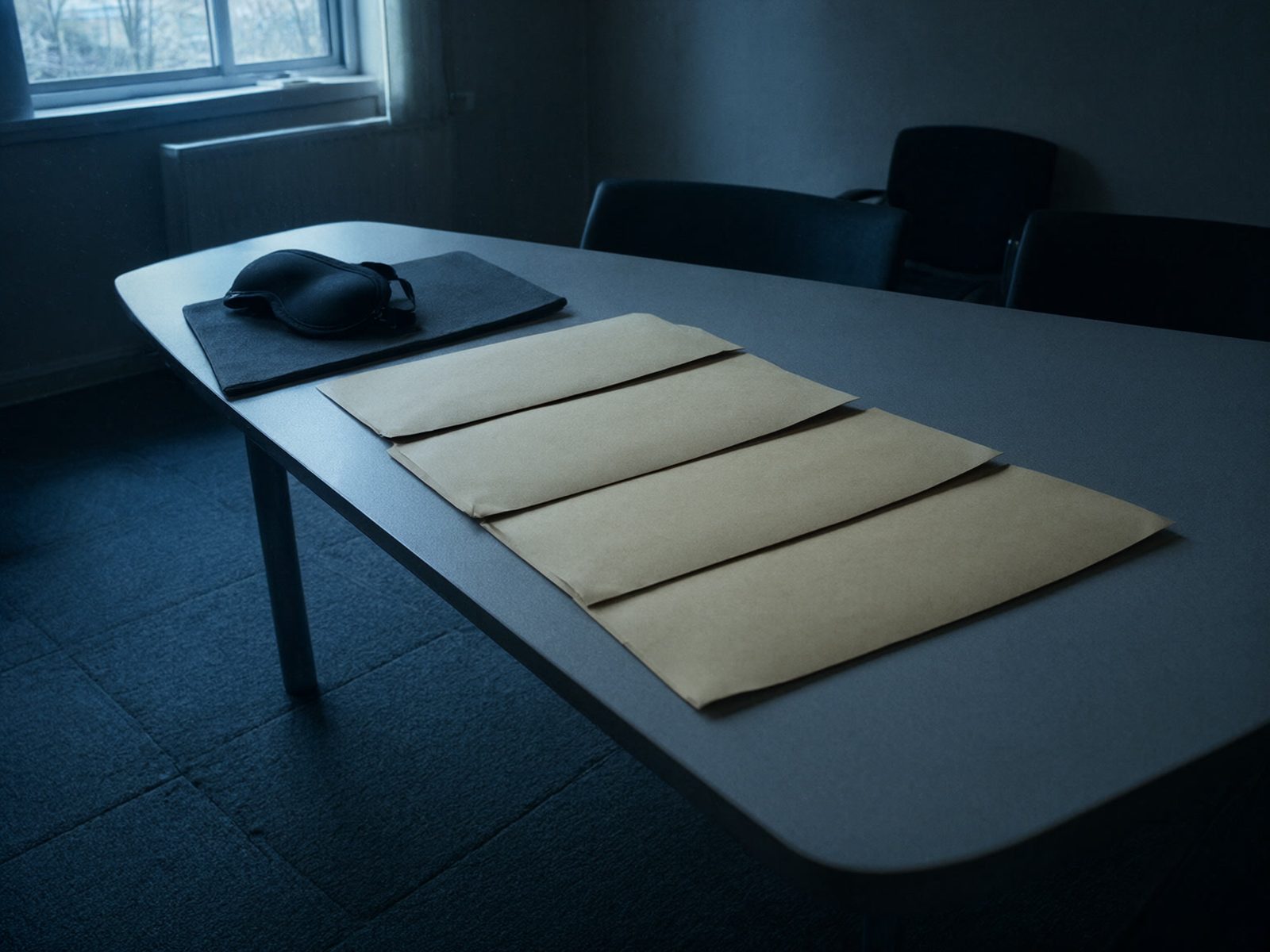
In 2002 the UK Ministry of Defence ran a study of remote viewing. By The Register's account of the released report, volunteers were blindfolded and asked to guess what was in a series of envelopes, and made a "close guess" 28 per cent of the time; the study concluded the technique had "little value". In 2015 the MoD confirmed it had undertaken only that one study, and that "no further work has been undertaken, nor is any planned".
The leading conventional explanation is that there was nothing to explain: the press reported a 28 per cent rate of "close" guesses (the BBC put it as 28 per cent of those tested) and a conclusion of "little value", and the MoD in effect accepted that by doing no further work. This entry has not seen the report's own wording or how guesses were scored, so the figures are the press's, not the study's.
AI illustration · not an evidence photograph
File
BR-0016
Date
About 2002 · released under Freedom of Information in 2007
Place
United Kingdom · Ministry of Defence
AssessmentC · reported: the report's findings are known here only from press accounts
The record on file
Witnesses
Volunteers tested for the MoD, by press accounts of the released report
Evidence
The study report, released under FOI in 2007 and not opened for this entry; The Register's account of the report, 23 February 2007; the MoD's FOI reply of 1 September 2015 confirming it was the only such study
Record made at the time
The MoD's study report, released under Freedom of Information in 2007, is described here, not quoted: its copy on the National Archives web archive sits behind a verification check and was not opened. The MoD's FOI reply of 1 September 2015 (FOI2015/07347) confirms the study, its 2002 date and its 2007 release; its contents come from The Register's report of 23 February 2007.
In the months after the attacks of September 2001 the United Kingdom's Ministry of Defence paid for a small trial of remote viewing, the claimed ability to describe a distant or hidden target by mental means alone. The trial ran in 2002, its report was classified, and the work was taken no further. Nothing about it was public until the report was released under the Freedom of Information Act in early 2007. This case rests on that report, a record made at the time by the people who ran the trial, not by anyone claiming the ability.
What was reported
The release was reported by BBC News on 23 February 2007 and by The Register the same day. By the BBC's account, the ministry first tried to recruit twelve "known" psychics who advertised their abilities on the internet. All of them refused, so "novice" volunteers were used instead. Commercial researchers were contracted, at a cost of £18,000, to test whether psychic ability existed and could be used for defence purposes. The volunteers were blindfolded and asked about the contents of sealed brown envelopes holding pictures, among them a knife, Mother Teresa and an "Asian individual". The BBC reported that most subjects "consistently failed", and that one fell asleep during his session.
A ministry spokeswoman told the BBC the study had been run "to assess claims made in some academic circles and to validate research carried out by other nations on psychic ability". She said it "concluded that remote viewing theories had little value to the MoD and was taken no further".
What evidence exists
The study report itself is the primary record. The ministry put it on its website after the Freedom of Information release, with many passages blanked out. That page now survives only on the UK Government Web Archive kept by the National Archives, where it sits behind an automated verification check; it was not opened for this entry, and the report's own figures and scoring method are described here only through others' reading of it.
The ministry has since confirmed the study in writing. In reply to a request in 2015, it stated that it "only undertook one study, in 2002, on remote viewing and no further work has been undertaken, nor is any planned", and that the study had been made public in 2007. The requester's letter, quoted in that reply, describes it as the "2001/2002" study and gives its release date as 12 January 2007, about six weeks before the press reports. Accounts of the report written from the released pages, notably one by the SPYSCAPE museum drawing on the researcher David Clarke's work, add that it was approved in 2001, ran to eighteen sessions in rented premises, and was based on a controlled remote-viewing manual downloaded from the internet. Those details have been seen in only that one account here.
What investigators concluded
The researchers' own verdict, as quoted from the report, was that the untrained subjects "rarely - if ever made an accurate assessment of the target", and that "as untrained Remote Viewers the subjects were almost completely unsuccessful". The ministry's policy conclusion, that the technique had "little value", followed from it. Mind Hacks, reading the released session logs in March 2007, quoted one in which the subject recorded only two images, the head of a bear or baboon and the word RATS, and in which the researchers judged that the target had clearly not been accessed. The 2015 reply shows the conclusion held: no later work was done.
The leading conventional explanation
The conventional reading is that there was no effect to explain. A blindfolded guess compared afterwards with a picture will sometimes look close, especially when the judge is generous about what counts as a match, and nothing in the press accounts shows that the trial compared its hits against a chance baseline. On the published descriptions, the researchers were indeed generous: SPYSCAPE reports that a sketch of a tower was taken as possibly "representative" of Mother Teresa's burial place. The study's own authors reached the negative conclusion, so this explanation is not an outsider's gloss but the record's own finding.
Its weakness is the one any null result carries. Eighteen sessions with a handful of volunteers who had never tried remote viewing is a small test, and proponents argue that it says little about trained viewers, which by SPYSCAPE's account the report itself acknowledged by treating the trial as a baseline for possible later work with experts.
What remains disputed
The headline figure is not settled. The BBC said 28 per cent "of those tested" made a close guess; The Register, working from the BBC's report, said volunteers made a close guess 28 per cent of the time; SPYSCAPE gives it as sessions in which viewers "may have accessed some feature of the target". Those are three different statistics, and without the report's scoring sheets it cannot be said which is right. The 2015 requester read the report as showing that some subjects accessed some targets, which sits awkwardly beside its "almost completely unsuccessful" verdict. The purpose of the trial is also open: the former MoD official Nick Pope suggested to The Guardian that it was meant for finding hidden weapons or Osama bin Laden, which the ministry has never confirmed, and the redactions do not settle it.
Sources
MoD defends psychic powers study(archived) — BBC News, 23 February 2007. The FOI release, recruitment of novices, £18,000 cost, envelope method, 28 per cent figure and the spokeswoman's statements.
FOI response FOI2015/07347(archived) — Ministry of Defence, 2015. Confirms the single 2002 study, its 2007 release and that no further work was done or planned.
MoD 'remote viewing' documents online(archived) — Vaughan Bell, Mind Hacks, 2007. The report's posting on the MoD website, the redactions and a session log with the researchers' assessment.
Corrected The full file: Mind Hacks was said to have judged that a session's target was not reached; it quoted the researchers' own judgement from the released log, and the text now attributes it to them.
Corrected The full file: The Register's 28 per cent figure was presented as an independent report; The Register was working from the BBC's report, and the text and source note now say so.
Corrected The full file: Nick Pope's suggestion about bin Laden was dated to 2007 and said to have been made to the press generally; the cited source attributes it to The Guardian without a date, and the text now says that.
Corrected The full file: The report was said to have been posted in two parts on an MoD disclosure log; the cited source says only that it was put on the MoD's website, and the text now says that.
Corrected The 28 per cent figure now carries the BBC's differing version, 28 per cent of those tested; the file previously gave only the reading of 28 per cent of guesses.
Added The full file, a long-form write-up with its sources, added.

 INDEPENDENT FIELD ARCHIVE