Cursed objects and places / Ötztal Alps, on the border of Austria and Italy
The Iceman's Seven
In October 2004 Helmut Simon, one of the climbers who found the Iceman in 1991, died on a mountain walk (in a blizzard by the Telegraph's account; a fall from a path by the EFE agency's), and newspapers began counting deaths among people linked to the body. By November 2005 the Telegraph's list stood at seven: a forensic pathologist killed in a car crash, a mountaineer in an avalanche, a filmmaker of a brain tumour, the head of the rescue team that searched for Simon of a heart attack, the archaeologist Konrad Spindler of what the press called multiple sclerosis (his university's obituary says amyotrophic lateral sclerosis), and the molecular biologist Tom Loy, who had a blood-clotting condition. The same reports give every death an ordinary cause.
The leading explanation is coincidence among the many people who worked on the find, with the causes of death recorded at the time. No comparison-group study like Nelson's for Tutankhamun was found for this entry, so the count has never been tested; but none of the deaths as reported needs a curse. Accepted.
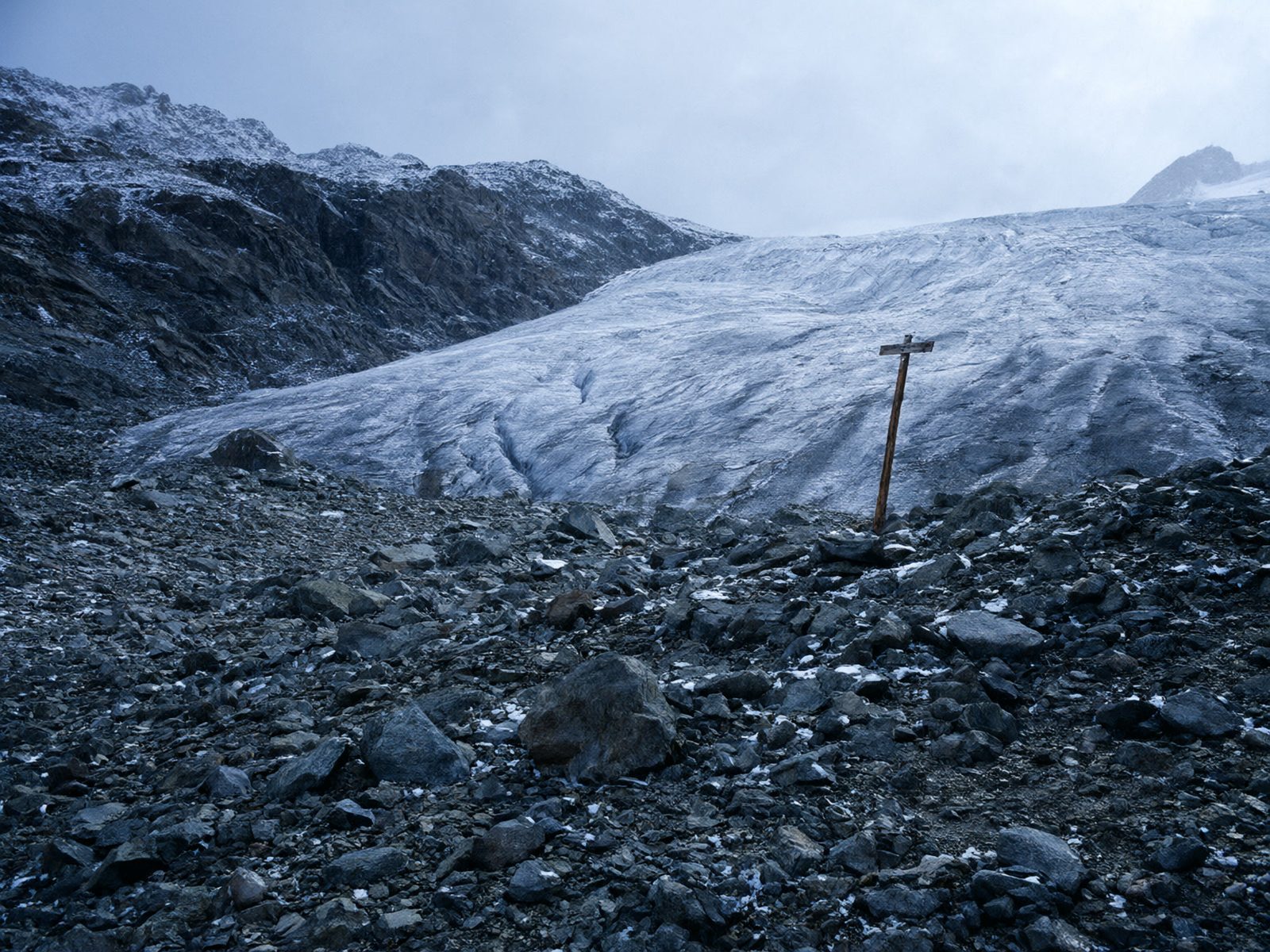
AI illustration · not an evidence photograph
File
BR-0033
Date
October 2004 – November 2005
Place
Ötztal Alps, on the border of Austria and Italy
AssessmentD · an ordinary cause on record for each death
The record on file
Witnesses
None to a curse. The case is a newspaper list of seven deaths among people connected with the Iceman, found in the Alps in 1991
Evidence
A Telegraph report of November 2005, reprinted by Gulf News, giving each death with its age and cause
Record made at the time
"'Curse' of the Iceman strikes again", a Telegraph report reprinted by Gulf News in November 2005, listing seven deaths with ages and causes and noting the inconclusive inquest into Tom Loy's. Earlier reports from October 2004 onward are listed by James Deem's Mummy Tombs site but were not opened.
Agency
The press; an inquest into one death, Tom Loy's, which ruled out foul play
On 19 September 1991 two German walkers, Erika and Helmut Simon, found a body in the ice near the Tisenjoch pass in the Ötztal Alps, on the border of Austria and Italy. It proved to be a Copper Age man about 5,300 years old, now known as Ötzi and kept in Bolzano. The "curse" attached to him is younger. It began in October 2004, when Helmut Simon went missing on a mountain walk, and it was assembled almost entirely by newspapers over the following year.
What was reported
Simon, 67 by most reports, set out alone on 15 October 2004 near Bad Hofgastein in the Austrian state of Salzburg. A UPI report from Berlin, dated 19 October and citing the Telegraph, said a search by about a hundred rescuers and dogs had been called off, and that German and Austrian papers had begun asking whether he had fallen victim to an "Otzi curse". An EFE report of 23 October said his body had been found in a stream bed after a hunter noticed a red patch on the mountainside, which turned out to be his jacket. By that account he slipped on an unmarked hunters' path and fell about 100 metres, and the authorities said his death was instant.
The list grew from there. In November 2005 the Telegraph, in a report reprinted by Gulf News, counted seven deaths "connected with Oetzi". In the order Deem gives, these were Rainer Henn, 64, a forensic pathologist who handled the body, in a car crash in 1992; Kurt Fritz, 52, a mountaineer said to have led Henn to the body, in an avalanche; Rainer Hölz, 47, who filmed the recovery, of a brain tumour; Simon himself; Dieter Warnecke, 45, head of the rescue team that searched for Simon, of a heart attack within hours of Simon's funeral; Konrad Spindler, the archaeologist who led the early scientific work; and Tom Loy, 63, a molecular biologist at the University of Queensland who had studied blood traces on Ötzi's tools and clothing.
The record, and where it is held
What puts the case on this shelf is that the press record is the curse. There was never an experiencer, only reporters counting. The central document is the Telegraph's November 2005 list, which survives in the Gulf News reprint, last updated 6 November 2005. It gives each death a name, an age and an ordinary cause. It also reports that Loy had been diagnosed about twelve years earlier with a rare condition that made his blood clot. It adds that an inquest into his death ruled out foul play but could not determine whether he died of natural causes, an accident or both. The earlier stories survive in the agency copy of October 2004 (UPI, EFE). James M. Deem's Mummy Tombs site kept a running tally from these reports and lists its press sources from 2004 to 2006.
What was concluded
No investigator ever examined the curse as such. Each death was handled in the ordinary way: a mountain rescue recovery and a finding of a fall for Simon, an inquest for Loy, and obituaries. The University of Innsbruck's notice for Spindler, issued on 18 April 2005, records that he died the previous day after a serious illness.
The leading conventional explanation
The explanation is coincidence, made to look like a pattern by the way the list was drawn up. Its strength is the size of the group the seven were taken from. The South Tyrol Museum of Archaeology says "well over 900 researchers" have studied the Iceman. Add the guides, rescuers, police, film crews and officials of 1991, and the pool runs into the hundreds before the press widens it to people linked only to the finder, as Warnecke was. Over fourteen years some deaths in a group that size, several of them among men in their sixties, are expected. Deem asked the obvious questions: how many people have had contact with the Iceman, and whether their death rate is higher than the general population's. Simon and Fritz died in the mountains. Loy's clotting condition was diagnosed long before his death. Mark Nelson ran this kind of test for Tutankhamun in the BMJ in 2002. Comparing the 25 Westerners present at the openings with those who were not, he found no significant difference in survival.
The weakness is that no such study exists for Ötzi. The count has been argued down, never measured.
What remains disputed
The details drift between reports. Simon is 67 in the Telegraph, UPI and EFE, and 69 on Deem's page. The Telegraph says he was killed in a sudden blizzard. Reuters says he fell after sudden bad weather near the place of his discovery. A dpa report from Bolzano in 2006 says he died after an avalanche accident. EFE describes a slip on a path near Bad Hofgastein, a long way from the Ötztal. The press gave Spindler's cause of death as complications of multiple sclerosis. The University of Innsbruck's obituary says amyotrophic lateral sclerosis, a different disease. It also gives his dates as 20 June 1939 to 17 April 2005, which makes him 65, not the 66 in the press. Deem notes that Fritz is not named in the most detailed account of the recovery, so his place on the list is uncertain. The dpa report of 2006 counted six deaths, not seven. Loy's inquest left the cause of his death open.
"The Curse of Ötzi?"(archived) — James M. Deem, Mummy Tombs (2014 archived copy). The running tally, the doubt about Fritz, and the statistical questions.
"35 years of Ötzi the Iceman" — South Tyrol Museum of Archaeology. Discovery date, the Simons, and the number of researchers who have studied the Iceman.
Corrected The full file: The count of six deaths comes from the 2006 dpa report, not from the book Deem cites on the recovery; the text now attributes it to dpa.
Corrected Konrad Spindler's illness is now given as amyotrophic lateral sclerosis, as his university's obituary says; the press, and previously this file, said multiple sclerosis.
Corrected Helmut Simon's death is now given in both versions, a blizzard by the Telegraph's account and a fall from a path by the EFE agency's; the file previously stated the blizzard as fact.
Added The full file, a long-form write-up with its sources, added.
Also filed under Cursed objects and places
The Dybbuk boxThe Wine Cabinet on eBay · 2003 listing · resold February 2004 · confession 8 July 2021
The Crying Boy curseThe Picture That Would Not Burn · 2 September – 31 October 1985

 INDEPENDENT FIELD ARCHIVE