The full file
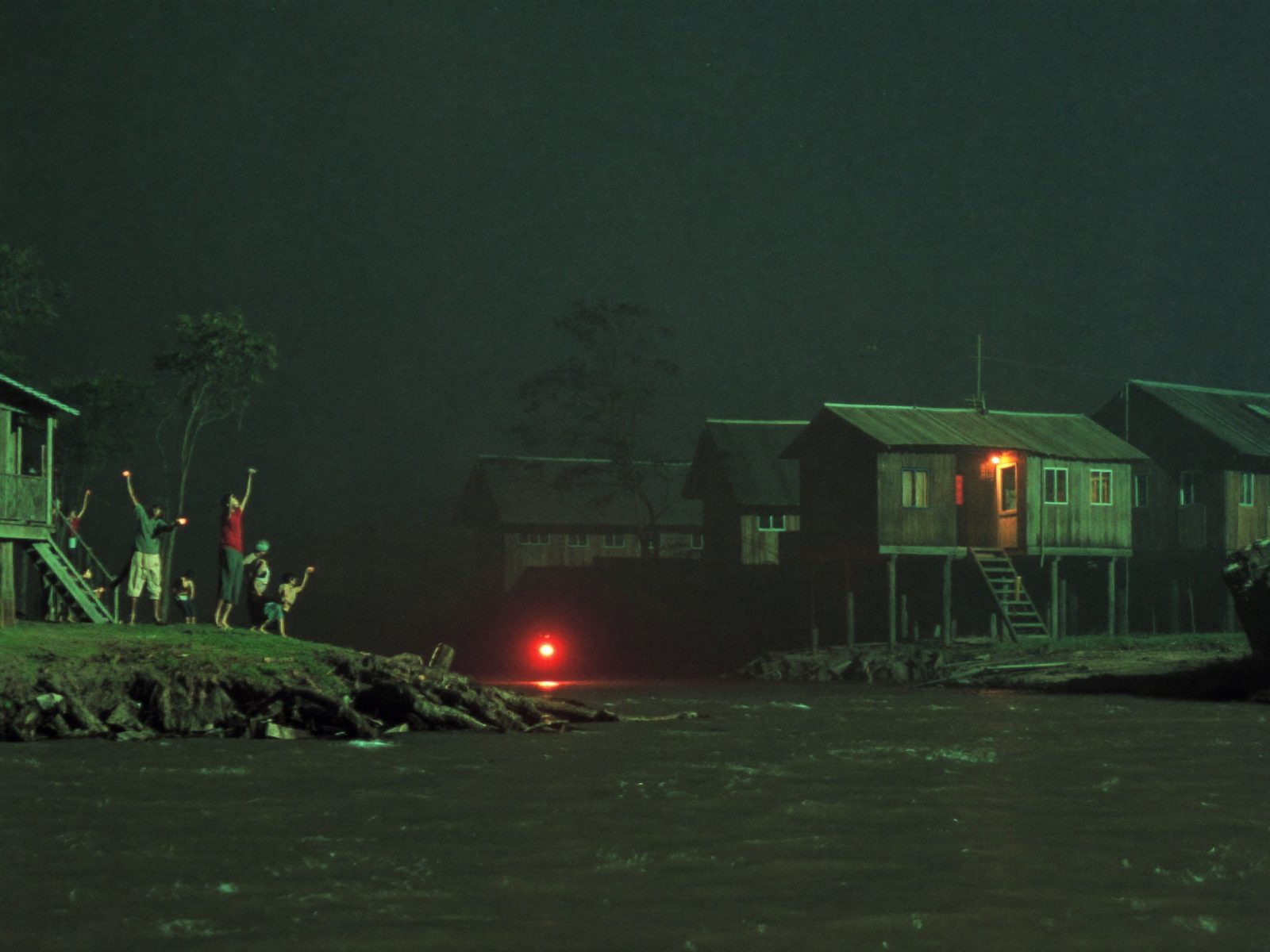
In the middle months of 1977, newspapers in Belém began printing reports of lights over the coast and islands of northern Pará, around the Marajó bay. The reports clustered on Colares, a fishing municipality about 100 kilometres from the capital, and spread to Vigia, Mosqueiro and villages towards Maranhão. Residents said the lights came down at night, through windows and roofs, and touched sleeping people, who woke paralysed, pale or burned. Because victims said their blood had been drawn, the lights were called chupa-chupa, roughly "sucker-sucker". Families gathered in single houses to keep vigil through the night, with bonfires and fireworks to drive the lights away, and the mayor asked the Air Force for help.
The operation
The First Regional Air Command (I COMAR) in Belém answered with Operação Prato, "Operation Saucer", with the National Information Service (SNI) attached and, according to the SNI's own account, some help from the Navy in collecting fishermen's stories. The field team was led by Captain Uyrangê Hollanda; Brigadier Protásio Lopes de Oliveira commanded I COMAR. Reference accounts give two field phases, 20 October to 11 November and 25 November to 5 December 1977, and the regional paper O Liberal dates the end of field work to 5 December, when Hollanda reported to the brigadier in Belém. Other sources describe the operation as lasting about four months, or more than 120 days, and the SNI report covers events into early 1978.
The team kept night watches in shifts, often from the top of a water tower, and slept by day. Their log for 27 October records residents pointing out a light at treetop level while the observers on the tower saw nothing. On 5 November they logged a light hovering over the water and a strong bluish light that moved north near the Colares lighthouse. Their Minolta SRT-101 camera recorded, in the report's words, "a white spot, as if it were a light"; another film developed with a black mark, as if burned.
The evidence and where it is held
The most solid public document is an 86-page SNI report, classified confidential, released in December 2008 after a request lodged by a commission of ufologists in December 2007. It is an extract, not the Air Force file itself, and it lists symptoms reported by people in contact with the lights: partial paralysis, headache, superficial burns, nausea, trembling and tiny holes in the skin. It includes rough drawings and does not say what the lights were.
How much more exists is disputed. O Liberal has reported more than 500 pages and 16 hours of film, released in part from 2004. In a 2022 lawsuit seeking the films, the federal court in Florianópolis recorded that a search of the National Archive's catalogue for "operação prato" returned six documents, none of them audiovisual. The Air Force told the court that its UFO material from 1952 to 2016 had been transferred to the National Archive, and the judge found no evidence beyond press reports and testimony that the films existed. The claim was dismissed.
What investigators concluded
The operation is generally summarised as having closed without identifying anything unusual. The released SNI extract records something less settled: the I COMAR team returned to Belém "keeping reserved about what was observed", with no consensus among its members, an attitude the report links to fear of ridicule. Twenty years later, in 1997, Hollanda gave an interview to the ufologists Ademar Gevaerd and Marco Antônio Petit in which he described his sightings and said the operation had been widely documented, with only a fraction released. O Liberal adds that on 5 December 1977 he told the brigadier that he and a sergeant had seen a huge object over the Guajará-Mirim river, and that the operation was then suspended. He died at home within months of the interview, by suicide according to the reports; sources disagree on whether it was two or three months later.
The conventional explanation
At the time, the assistant officer Lieutenant Colonel Camilo told A Província do Pará on 5 November 1977 that residents had mistaken artificial satellites and meteors for craft, and that the bodily reactions were a response to fear fed by premature talk. O Liberal reports that the operation's psychiatrist, Lieutenant Pedro Ernesto Póvoa, called the attacks he examined collective hysteria. A Província itself treated the scare as a hallucination spreading through the interior and noted that most victims were women.
The strength of this reading is that the lights were seen at night, over water, by frightened people primed by the press, and that the team's own logs show residents seeing lights the observers could not. Its weakness is that it was never tested case by case. The doctor at the Colares health post, Wellaide Cecim Carvalho, then 22, examined a stream of patients with burns and skin lesions; no medical records have been published, and the military hypothesis was stated rather than demonstrated.
What remains open
The Air Force file, if it survives beyond the six catalogued items, has not been published in full. The photographs cannot be assessed because almost none have been released with their provenance. The commander's 1997 account and the operation's closing position cannot both be accurate, and no contemporaneous record of Hollanda's personal view has been published to decide between them. The medical reports are known only through later retellings. An Air Force team spent weeks watching Colares at night, logged lights it could not identify, and left no public explanation for them.
Sources
- Fernando Rodrigues, "SNI investigou óvnis durante a ditadura" (archived) — Folha de S.Paulo, 11 January 2009. The 86-page SNI report, its release, log entries, symptoms, camera and the team's lack of consensus.
- Sentença, Procedimento do Juizado Especial Cível nº 5002417-48.2022.4.04.7200/SC — Justiça Federal, 3ª Vara Federal de Florianópolis, 2022. National Archive search returning six documents, none audiovisual; Air Force transfer of its UFO collection.
- Phillippe Sendas de Paula Fernandes and Marialva Barbosa, "História oral e memória na Amazônia: o fenômeno Chupa-Chupa" (archived) — Revista Mídia e Cotidiano (UFF), 2016. Vigils, Dr Wellaide Cecim Carvalho, and the November 1977 A Província do Pará reports quoting Lt Col Camilo.
- Ana Leticia Lopes Tostes and Luiz Cezar Silva dos Santos, "No céu da Amazônia há algo a mais que as estrelas" (archived) — Aturá, Revista Pan-Amazônica de Comunicação, 2020. How three Belém papers reported the lights in October and November 1977; the "four months" description.
- Caio Oliveira, "UFOs in the Amazon: 45 years of an unsolved mystery" (archived) — O Liberal, 2021. Hollanda's base, the 5 December end of field work, the Guajará-Mirim report, the 1997 interview and death, Póvoa's "collective hysteria".
- Gabriel da Mota, "Morre aos 94 anos Carmen Vale, testemunha histórica do chupa-chupa em Colares" (archived) — O Liberal, 2025. A witness account, and the 500 pages, 16 hours of film and 2004 release claim.
- Operação Prato (archived) — Wikipedia, used as an index. Phase dates, command structure, the 1997 interviewers, vigils and the mayor's request, and the "no unusual phenomena" summary.

 INDEPENDENT FIELD ARCHIVE