High strangeness / Jardim Andere, Varginha, Minas Gerais, Brazil
The Figure by the Wall in Varginha
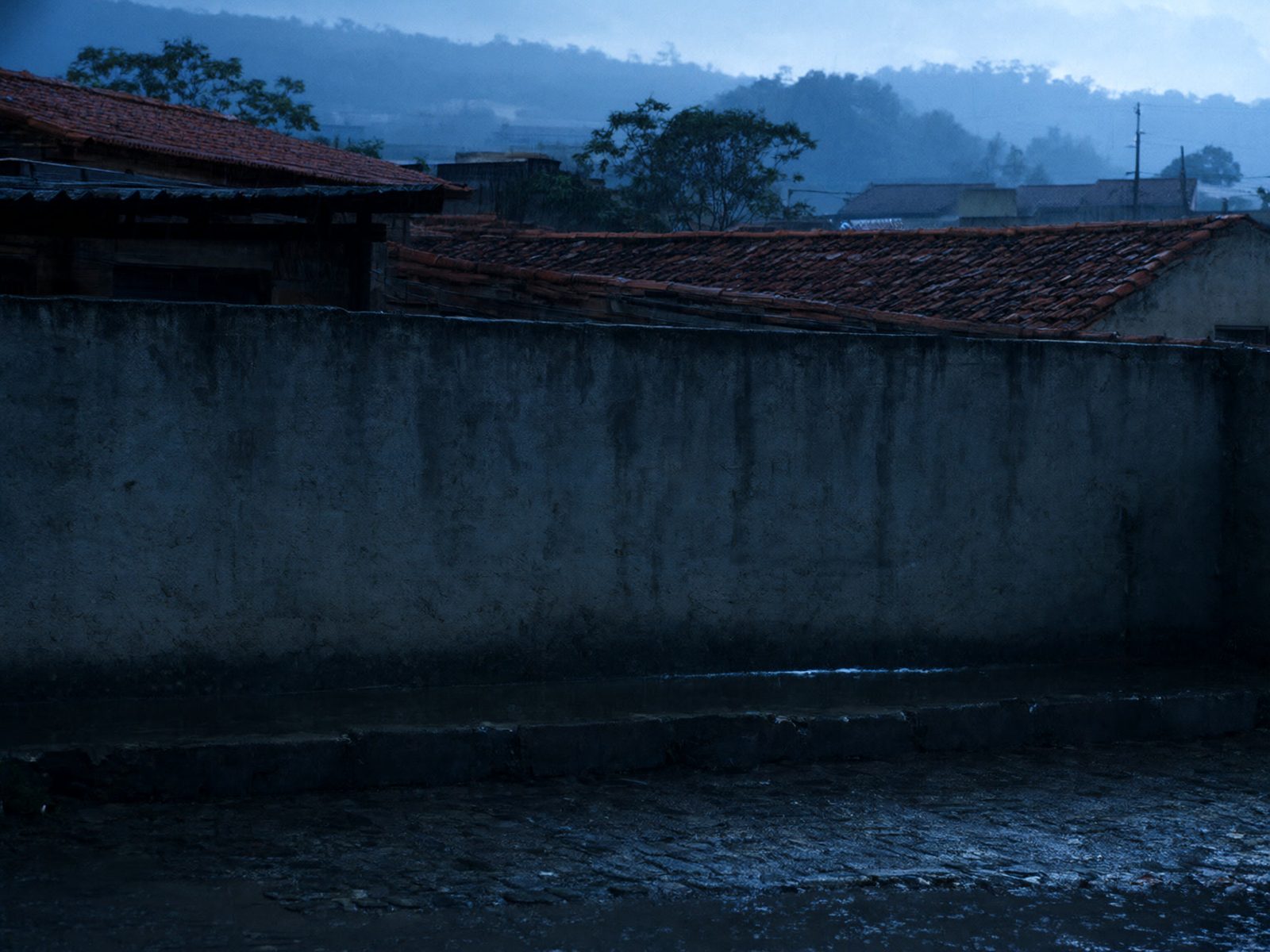
On 20 January 1996, a day of heavy rain and strong wind, three young women reported a strange creature crouching by a wall on a vacant lot in Jardim Andere, Varginha. After a 1996 book by ufologists named Army personnel as having captured and transported an extraterrestrial, the Army Sergeants' School at Três Corações opened a military police inquiry in January 1997. Its report found that no capture of any animal or strange creature had been requested that day, that the fire-brigade and Army movements the book cited were real but unrelated, and that the women had most probably seen a local man, apparently mentally disturbed and dirty from the rain, crouching by a wall.
The inquiry's explanation is misidentification of a man sheltering from the storm, supported by a photographic simulation study. It is the file's own finding, but it is the Army's finding about its own soldiers, made a year after the event, and the inquiry's question was whether the book's authors had committed a crime: it concluded the book had "o caráter de ficção" and that no crime had been committed.
AI illustration · not an evidence photograph
File
BR-0029
Date
20 January 1996 · Army inquiry 1997
Place
Jardim Andere, Varginha, Minas Gerais, Brazil
AssessmentD · a specific mundane cause fits better, on the inquiry's own finding
The record on file
Witnesses
Three young women, the eldest 22 (the Army inquiry called them "três meninas"), who reported a creature crouching by a wall on a vacant lot; police, fire-brigade and Army officers questioned by the inquiry a year later
Evidence
The Army's inquiry file, 357 sheets in two volumes, with testimony, photographs and a photographic simulation study, now open at Brazil's Superior Military Court
Record made at the time
Inquérito Policial Militar n.º 18/1997, opened by the commander of the Army Sergeants' School (EsSA), Três Corações, by Portaria 009-AjG.2 of 29 January 1997, with the report of the officer in charge, Lt Col Lúcio Carlos Finholdt Pereira, dated 11 April 1997, and the commander's Solução of 18 April 1997; 357 sheets in two volumes, filed at the STM as Autos Findos 908. It was made a year after the sighting, not on the day; the police and fire-brigade records of 20 January 1996 are known only as cited in it.
Agency
Escola de Sargentos das Armas (EsSA), Brazilian Army; filed at the Superior Tribunal Militar
On the afternoon of Saturday 20 January 1996, three young women in Varginha, a coffee town in the south of Minas Gerais, said they had seen a small creature crouching by a wall on a vacant lot in the Jardim Andere district. The Estado de Minas gave their ages as 22, 16 or 17, and 14; the Army inquiry later called them "três meninas". Their account, as the newspaper printed it in March 1996, was of a short being with oily skin, reddened eyes and three protuberances on its head like horns. The paper put the time at about three o'clock in one report and about two in another. Within weeks, local ufologists were saying that the fire brigade had netted a creature that morning, that Army lorries from the Sergeants' School at Três Corações had carried it away, and that a body had passed through a local hospital.
What was reported, and how it grew
The story spread through the regional press and the television programme Fantástico. By May 1996 the Estado de Minas was reporting ufologists' claims of a discreet capture operation, with soldiers and officers of the school named by ufologists, and anonymous informants describing a dead creature in a sealed box. The fire-brigade captain at Varginha denied that his men had caught anything, and in May the school's commander issued a note saying the school and its members had had no connection with the events alleged. In August 1996 the ufologist Vitório Pacaccini and his collaborator Maxs Portes published Incidente em Varginha, which named Army personnel as the captors.
The record and where it is held
The surviving record made by someone other than the witnesses is the Army's own file: Inquérito Policial Militar n.º 18/1997, opened by the school's commander on 29 January 1997 to examine the book. It runs to 357 sheets in two volumes and is held, with unrestricted access, in the ARQUIMEDES archive of Brazil's Superior Tribunal Militar as Autos Findos 908. Besides testimony from Army, military-police and fire-brigade officers, and from Pacaccini and his colleague Ubirajara Franco Rodrigues, it contains cuttings of the 1996 press coverage and a photographic simulation study. It was made a year after the sighting; the fire-brigade and police logs of January 1996 survive only as described in it.
What the inquiry concluded
The officer in charge, Lt Col Lúcio Carlos Finholdt Pereira, signed his report on 11 April 1997. It records the commander of Varginha's military-police battalion as saying that heavy rain and strong wind had caused many fire-brigade call-outs, but that no request to seize an animal or "criatura estranha" had been logged that day. A fire-brigade major told the inquiry that the unit's numbered daily register showed no capture. The lorries were real: Mercedes vehicles still under warranty had been driven in convoy to a dealership in Varginha for servicing, and other vehicles had gone to Jaguariúna to collect fodder for the school's horses. An internal Army inquiry in the first half of 1996 had already found no involvement by the school's soldiers. Pacaccini and Rodrigues declined to name their informants. The report found the book had only "o caráter de ficção" and that its authors had committed no crime, and the commander's ruling of 18 April 1997 agreed.
The leading explanation: a man in the rain
The inquiry's explanation is misidentification. The police commander gave it photographs of a local man, apparently mentally disturbed, who was often seen crouching in the area, and the report judged it more probable that this man, dirty from the downpour and crouched by a wall, had been taken by "três meninas aterrorizadas" for a creature from space. A simulation study by the school's computing section set his photographs beside a drawing of the creature.
The explanation is plain, it fits the weather and the posture, and it is consistent with the denials made in 1996, when an Army spokesman told the Christian Science Monitor that the convoy had been delivering vehicles for maintenance. Its weaknesses are real. The inquiry was the Army examining claims about its own soldiers, a year after the event, and its question was whether a crime had been committed, not what the women saw. It did not take evidence from the three women; none appears among its nine witnesses. Pacaccini has argued that they knew the man and would not have mistaken him. The police commander placed the storm "probably" on 19 January, not the 20th.
Later accounts and what remains disputed
The Superior Military Court publicised the file in January 2026, thirty years on. In a TV Globo documentary broadcast that month, Rodrigues, the lawyer who first interviewed the women, said he had made "o grande erro que os ufólogos cometem" by telling them that ufology believed what they saw were beings from other planets, and that he no longer believed the story. Other ufologists maintain that the inquiry was a cover-up. The women's own account has not been withdrawn. Whether any capture happened rests on informants who have never been named, and nothing physical survives.
Sources
Inquérito Policial Militar n.18/1997(archived) — Superior Tribunal Militar, ARQUIMEDES archive, 1997 (digitised volumes read). Report of 11 April 1997, commander's ruling of 18 April 1997, testimony, simulation study and press cuttings.
Corrected The full file: The text quoted the Estado de Minas as reporting a "secret operation" in May 1996. The paper quotes a ufologist calling it a discreet, well-planned operation, so the text now says this in plain words without quotation marks.
Corrected The full file: The text dated the Sergeants' School commander's note to 11 May 1996. The note survives in press cuttings in the Army inquiry file, but that exact date could not be confirmed, so the text now says May 1996.
Corrected The three witnesses were young women, the eldest 22, though the Army inquiry called them 'três meninas'; the file previously called them girls.
Corrected The Army inquiry's judgement that they had most probably seen a local man is now noted as reached without taking their evidence.
Added The full file, a long-form write-up with its sources, added.
Also filed under High strangeness
Skinwalker RanchThe Ranch in the Uintah Basin · About 1995–2012 · ranch bought 1996, program ended 2012
Voronezh UFO incidentThe Landing in the Voronezh Park · Between 23 and 29 September 1989 · reported by TASS 9 October 1989

 INDEPENDENT FIELD ARCHIVE